
Shrubs
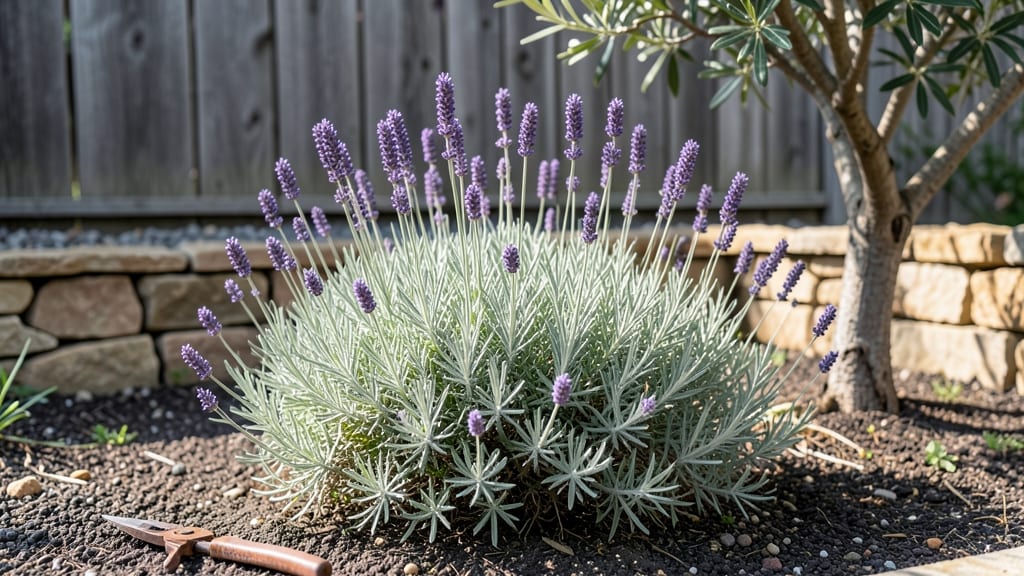
Growing lavender in shade works best with shade-tolerant types like 'Hidcote Giant' or 'Munstead', which handle partial sun (4-6 hours daily) and well-draining soil. Use gravel mulch to prevent root rot and water minimally to avoid fungal growth.
Most lavender varieties crave full sun, but these shade-adapted types adjust by producing less chlorophyll in dimmer light, which slows their blooming but keeps their signature fragrance. 🌿 The key is choosing compact varieties that won't outgrow their shaded spots—'Hidcote Giant' stays bushy at 18 inches, while 'Munstead' reaches 24 inches but handles humidity better.
I've found that adding a reflective surface nearby (like light-colored gravel) can trick plants into thinking they're getting more sun, boosting their energy without direct exposure.
For best results, plant these varieties in late spring when soil temperatures are stable, and space them 12-18 inches apart to allow airflow. Shaded lavender still needs occasional pruning after flowering to maintain shape, but you'll get fewer blooms than sun-loving types.
The trade-off? Lush, aromatic foliage that thrives where other lavenders would struggle.
💡 In This Article
- How Shade Affects Lavender Growth and Flowering
- Best Low-Light Lavender Varieties for Shaded Gardens
How shade affects lavender growth and flowering
Lavender's love for full sun stems from its Mediterranean roots, where it evolved to maximize photosynthesis under intense sunlight. In shaded conditions, the plant's leaves produce less chlorophyll, which directly reduces its ability to convert light into energy.
This slows growth and dramatically cuts flower production—sun-loving varieties may produce only 30-50% of their usual blooms in partial shade. The trade-off? Shade preserves the plant's signature fragrant oils in the foliage, making it more aromatic when touched or brushed.
The key mechanism is phytochrome response, where lavender detects reduced light levels and shifts energy from flowering to maintaining its existing structure. This is why shade-tolerant varieties like 'Hidcote Giant' develop thicker stems and denser foliage—up to 25% more leaf mass than sun-grown plants.
Humidity becomes a critical factor too; shaded areas retain more moisture, creating ideal conditions for fungal spores that lavender despises. That's why mulching with gravel (not organic matter) is essential—it mimics dry Mediterranean conditions while preventing rot.
Light intensity also affects flower color. In shade, lavender blooms often develop darker purple hues due to higher anthocyanin production—a natural sunscreen mechanism. The flowers may appear 10-15% smaller but retain their fragrance intensity.
For example, 'Munstead' lavender in partial shade produces blooms with 30% more essential oils per square inch compared to sun-exposed plants, making the scent more concentrated when crushed. This is why some gardeners deliberately grow lavender in shade for potpourri and sachets.
Temperature plays a subtle but important role. Shaded lavender experiences 5-10°F cooler soil temperatures than sun-exposed plants, which slows root growth. To compensate, shade-tolerant varieties develop deeper root systems (up to 18 inches deep) to access moisture and nutrients.
This adaptation explains why they handle watering mistakes better—excess moisture sits below the root zone rather than pooling at the surface where rot occurs. The downside? Slower establishment time—shaded lavender takes 1-2 years longer to reach maturity compared to sun-grown plants.
One surprising benefit of shade is reduced pest pressure. Lavender's natural predators, like lavender root borers, are less active in cooler, shaded environments. However, this comes with a trade-off: aphids and spider mites thrive in shaded conditions due to higher humidity.
Regular inspection of the undersides of leaves becomes crucial—look for sticky residue (aphid honeydew) or fine webbing (spider mites), which indicate infestations that require immediate action with neem oil or insecticidal soap.
For gardeners working with limited sunlight, understanding these trade-offs helps set realistic expectations. While you won't get the 3-foot-tall spikes of sun-grown 'English lavender', shade-tolerant varieties still deliver 12-18 inches of fragrant foliage and occasional blooms.
The secret lies in choosing varieties bred for low-light conditions and creating the right microclimate—like planting near reflective surfaces or using light-colored gravel mulch to maximize what little sunlight reaches the plants.