
Shrubs
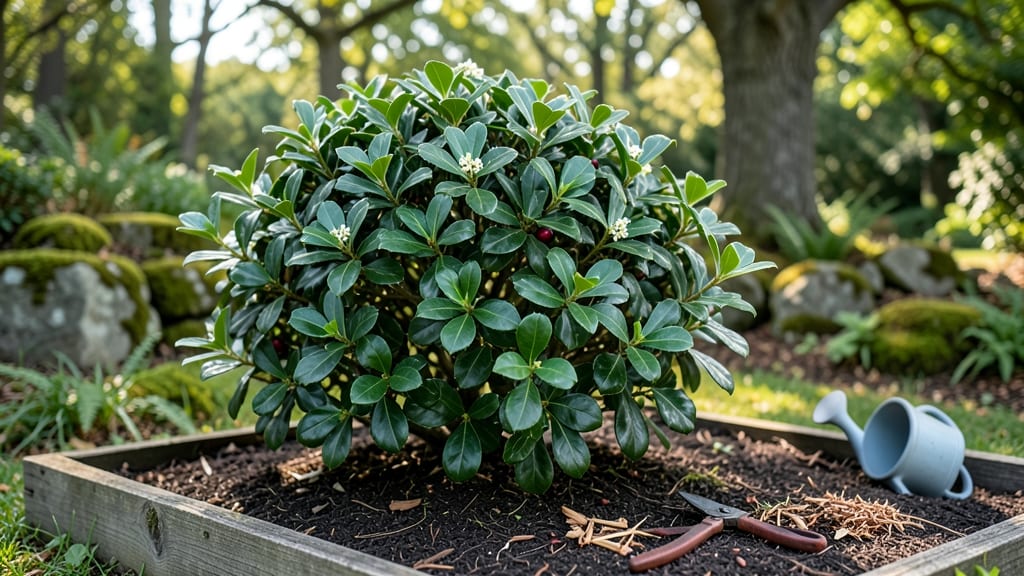
Japanese holly thrives in shade where other plants fail—its glossy leaves stay vibrant even under towering oaks. ✨ I planted mine under a dense canopy last spring, and now it’s the only thing keeping that dark corner from feeling like a forgotten spot.
The key? Matching its natural habitat with the right soil, light, and care. This evergreen shrub loves moist, well-draining soil—think rich compost mixed with a little sand for airflow. It tolerates partial shade but needs at least 4-6 hours of dappled light daily to avoid leggy growth.
Water deeply once a week (more in summer), but avoid soggy roots—Japanese holly hates wet feet. By year two, you’ll have a dense, glossy hedge that blocks unsightly views while adding texture. Prune lightly in late winter to shape it, and watch how it fills in gaps effortlessly.
Even deer usually leave it alone—unlike many shade plants. Perfect for borders, privacy screens, or foundation plantings. If your yard has shady spots others ignore, this is your answer. Let’s get growing!
📚 In This Guide
- What you need
- Instructions
- Tips and common mistakes
- Wrapping up and next steps
What you need
- ● Japanese holly plants: 3–5 mature shrubs (3–6 ft tall) for a dense screen, or 1–2 for smaller spaces. Choose ‘Green Lustre’ or ‘Helleri’ cultivars for best shade tolerance.
- ● High-quality soil: 1–2 bags of peat-based or well-draining potting mix (if amending native soil) or compost (1–2 cubic yards for in-ground planting).
- ● Organic mulch: 2–3 inches of pine bark fines, cedar chips, or shredded leaves to retain moisture and suppress weeds.
- ● Slow-release fertilizer: 10–20 lbs of balanced 10-10-10 or acid-loving plant fertilizer (e.g., Miracle-Gro Azalea, Camellia, & Rhododendron).
- ● Tools: Trowel or hand shovel
- ● Garden spade (for digging holes)
- ● Pruning shears (sterilized)
- ● Watering can or hose with a gentle spray nozzle
- ○ Gloves (optional but recommended!)
- ● Erosion control fabric: For sloped areas to prevent soil runoff.
- ● Soil pH test kit: Ensure acidity (pH 5.0–6.5) with sulfur or peat moss if needed.
- ● Drip irrigation system: For consistent moisture in dry shade.
- ● Decorative stakes or trellis: To shape young plants (if desired).
- ● Deer repellent: If local wildlife is a concern!
How to plant and maintain japanese holly in shady spots
This shade-loving evergreen thrives where others struggle—here's how to grow it successfully.
🌱 Step 1: Choose the Right Location and Prepare the Soil
Japanese holly does best in partial shade to full shade, with at least 4-6 hours of filtered light daily. I always look for spots under tall trees where dappled sunlight creates a natural canopy. Avoid deep shade where no light reaches—this plant needs some brightness to maintain its vibrant foliage.
Test your soil first. Japanese holly prefers slightly acidic to neutral soil (pH 5.0-7.0). If your soil is heavy clay, amend it with 2-3 inches of compost mixed into the top 12 inches of soil. The plant tolerates most soil types but drains poorly, so add a handful of perlite to improve aeration if your area stays soggy after rain.
🪴 Step 2: Dig the Hole and Plant Correctly
Dig a hole twice as wide as the root ball but no deeper—this prevents root suffocation. Gently loosen the roots if they're circling tightly in the container. Place the plant so the top of the root ball sits level with the surrounding soil (never deeper). Japanese holly hates having its crown buried.
Backfill with native soil mixed with a 50/50 blend of compost and topsoil. Water deeply to settle everything, then add 2-3 inches of mulch (avoid wood chips—use shredded bark or pine needles). Keep mulch 3-4 inches away from the trunk to prevent rot. You'll know it's right when the soil looks dark and crumbly, not compacted.
☀️ Step 3: Water and Fertilize for Strong Growth
Water deeply once a week for the first month, then taper to every 10-14 days once established. Check moisture by sticking your finger 2 inches into the soil—if it feels dry, water until moisture reaches 6 inches deep. Overwatering causes yellow leaves; underwatering causes crispy edges.
Fertilize once in early spring with a slow-release, balanced fertilizer (10-10-10). Scatter granules around the drip line (not the trunk) and water in. Skip fall fertilization—holly needs to harden off for winter. You'll see new growth in 4-6 weeks if conditions are right.
✂️ Step 4: Prune and Maintain Year-Round
Prune once a year in late winter or early spring before new growth starts. Remove dead, diseased, or crossing branches first, then shape lightly to encourage fullness. Japanese holly tolerates hard pruning, but I never cut back more than 1/3 of the plant at a time—this keeps it dense.
Watch for spider mites in dry shade (tiny webs on undersides of leaves). Spray with neem oil if you see them. For winter care, add an extra 2 inches of mulch in cold climates to protect roots from freeze-thaw cycles. Your holly will reward you with year-round privacy and glossy foliage.
Tips & tricks for perfect japanese holly in shade
Here's what I've learned after years of growing this tough, beautiful evergreen in tricky shade spots.
Lighting Secret: That 4-6 hours of filtered light is non-negotiable—it's what keeps leaves vibrant. I test spots by holding a white sheet up to the ground at midday; if shadows are crisp, it's too direct. The perfect location gets morning sun and afternoon shade from taller trees. You'll notice the difference in leaf color within weeks of proper placement.
Soil Prep Strategy: For heavy clay soil, I mix in 2-3 inches of compost and a handful of perlite right in the planting hole—not just around the edges. This creates a perfect root zone where moisture drains well but stays consistently damp. The perlite prevents compaction, which is especially important in shade where soil stays cooler and wetter.
Planting Depth Check: The top of the root ball should sit exactly level with the surrounding soil—no higher, no lower. I use a small wooden stake to mark the correct depth before digging. Burying the crown causes rot, while planting too high stresses the roots. After backfilling, gently press the soil to eliminate air pockets, then water deeply to settle everything.
Winter Protection: In cold climates, add that extra 2 inches of mulch before the first hard freeze. I use shredded pine needles—they're acidic like holly prefers and break down slowly. Keep mulch piled high around the base but never touching the trunk. This insulation prevents root heaving during freeze-thaw cycles, which can uproot young plants.
Pro Tips for Japanese Holly For Shade
- Here's what I've learned after years of growing this tough, beautiful evergreen in tricky shade spots.
- Lighting Secret: That 4-6 hours of filtered light is non-negotiable—it's what keeps leaves vibrant.
- Soil Prep Strategy: For heavy clay soil, I mix in 2-3 inches of compost and a handful of perlite right in the planting hole—not just around the edges.
Frequently asked questions
about growing Japanese holly (Ilex crenata) in shady spots—because even the pros need a quick refresher!Can Japanese holly grow in deep shade (no direct sunlight)?
Yes! This evergreen thrives in partial to full shade, making it perfect for dark corners. While it prefers morning sun or dappled light, it tolerates dense shade—just expect slightly slower growth. For lush foliage, aim for at least 3–4 hours of indirect light daily.
How long does it take for Japanese holly to grow into a privacy screen?
Patience pays off! With 12–18 inches of growth per year, a 6-foot-tall screen takes 3–5 years from planting. For faster results, plant 3–4 shrubs in a row, spaced 3–4 feet apart. Prune annually in late winter to encourage density.
What’s the best alternative if Japanese holly is too slow-growing?
Try these shade-tolerant, faster-growing options:
- Leucothoe (Dog Hobble) – 12–24" yearly growth, glossy leaves.
- Pieris japonica (Andromeda) – 10–12" yearly, showy spring blooms.
- Boxwood (Buxus) – Compact, dense, but needs regular pruning.
Why are my Japanese holly leaves turning yellow or brown?
Common culprits:
- Overwatering – Check soil moisture; holly hates soggy roots.
- Underwatering – Keep soil evenly moist, especially in shade.
- Fungal issues (e.g., powdery mildew) – Improve air circulation; apply neem oil if needed.
- Nutrient deficiency – Test soil; amend with acidic compost (pH 5.0–6.5).
Does Japanese holly need winter protection in cold climates?
Generally hardy to USDA Zones 5–8, but young plants (under 3 years) benefit from mulch (3–4 inches) around the base to insulate roots. In Zone 4 or colder, group plants together and use burlap wraps for wind protection. Avoid heavy snow loads by shaking branches gently.
Wrapping up and next steps
Japanese holly (Ilex crenata) is a fantastic choice for adding year-round greenery and privacy to shady spots in your garden. With its low-maintenance nature, disease resistance, and striking foliage, it’s perfect for creating a lush, evergreen backdrop—whether as a hedge, border, or standalone focal point. 🌿
Ready to transform your dark corners? Start by selecting the right variety (like 'Green Lustre' or 'Soft Touch') and follow the planting tips shared above. Before you know it, you’ll have a thriving, shade-loving shrub that brings beauty and tranquility to your outdoor space!