
Light Requirements
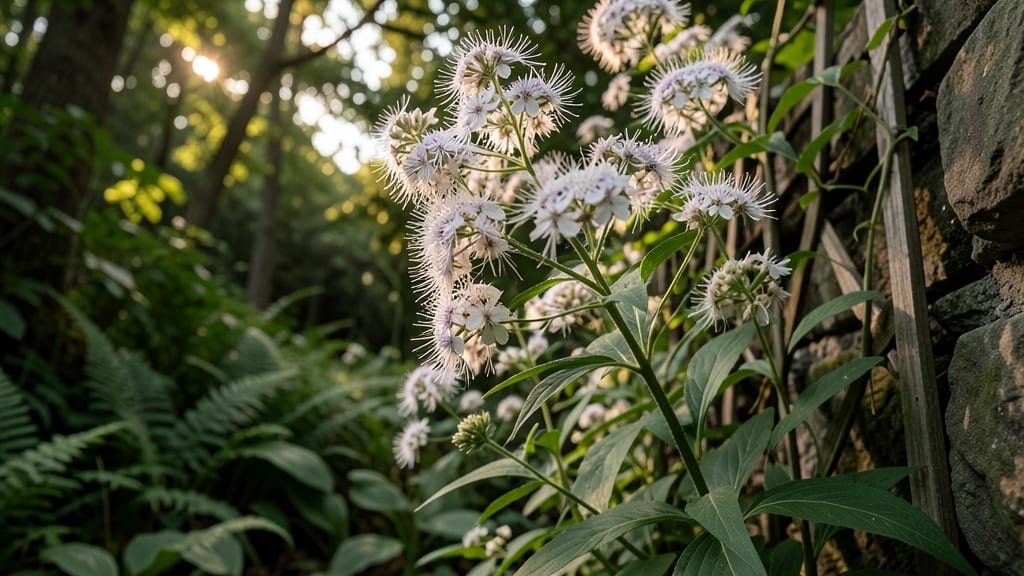
Struggling to grow vibrant flowers in your shady garden? These 10 full shade flowering plants defy the myth that blooms need sunlight, offering fragrant beauty and low-maintenance growth in even the darkest corners of your yard.
Sweet Woodruff Delicate Ground Cover
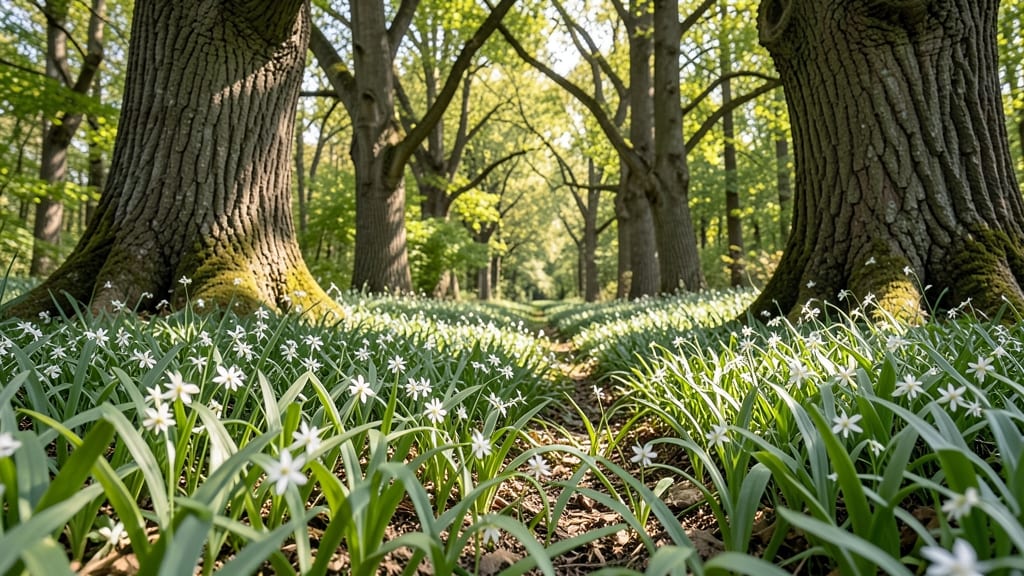
Want to transform your shady garden path into a fragrant woodland retreat? Sweet woodruff is the secret weapon for creating a soft, sensory-rich carpet that thrives under trees while releasing a vanilla-like aroma when brushed against.
This delicate ground cover spreads quickly to form a lush, 3-inch-tall mat of trifoliate leaves, perfect for suppressing weeds while adding texture. It blooms in late spring with tiny white flowers that attract pollinators, and its deep shade tolerance makes it ideal for areas where other plants struggle. Simply plant in well-draining soil and let it spread naturally—no heavy maintenance required!
Perfect for pollinator gardens and woodland-style landscapes, sweet woodruff brings both fragrance and function to shaded areas where most plants fade away. 🌿
Bleeding Heart Classic Shade Beauty
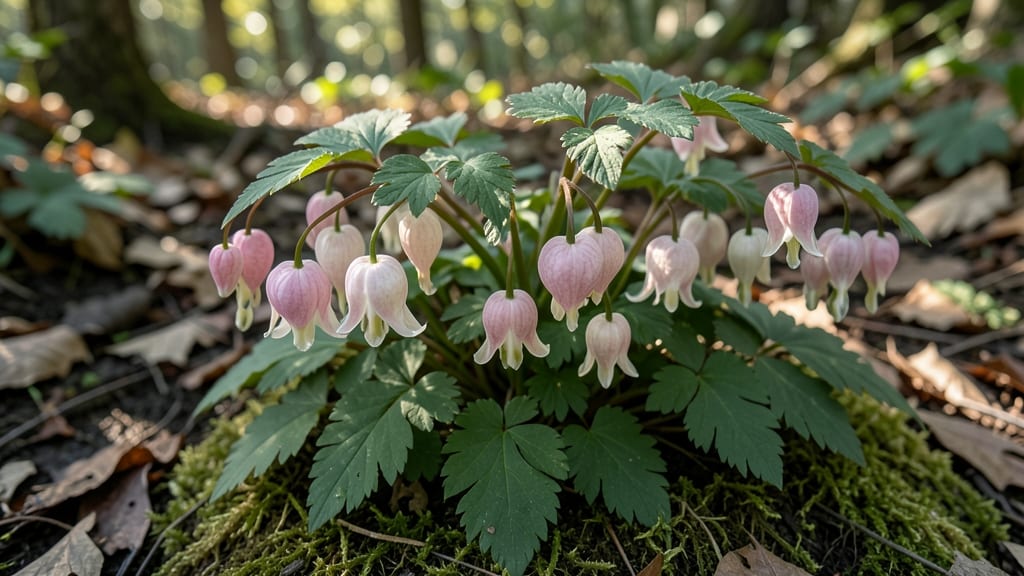
Transform your shady garden into a romantic retreat with bleeding heart (Dicentra spectabilis), a perennial that thrives where others fade. Its delicate, heart-shaped pink or white flowers dangle like lace from arching stems, creating a cascading effect perfect for borders, containers, or woodland gardens.
This old-fashioned beauty blooms twice a year—once in spring and again in late summer—and prefers deep shade with moist, well-draining soil. Deadhead spent blooms to encourage reblooming, and divide clumps every 3-4 years to maintain vigor. Pair it with ferns or hostas for a classic woodland combo.
Ideal for gardeners who love nostalgic charm, bleeding heart adds vertical drama without needing sunlight. It’s also deer-resistant, making it a practical choice for rural or suburban shade gardens. 🌷
Japanese Anemone Late-Season Stunner
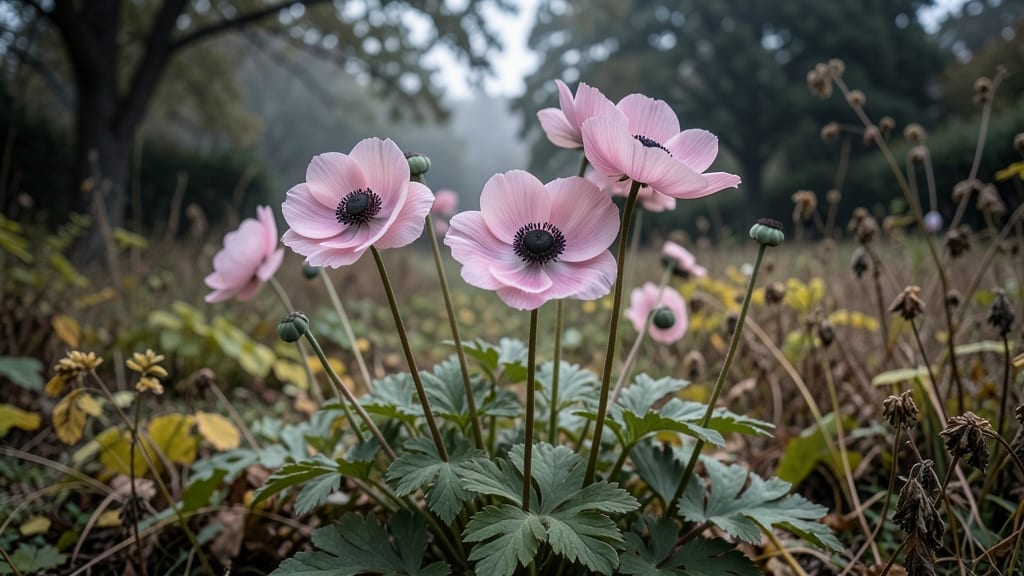
When your shade garden looks tired by autumn, Japanese anemone (Anemone × hybrida) steps in like a dramatic diva, bursting with pink blooms when most shade plants have called it quits. This late-season stunner thrives in full to partial shade, making it ideal for those dark corners where sunlight barely touches.
Plant it in moist, well-draining soil and give it space to spread—mature plants reach 3-4 feet tall with a similar spread. The fall-blooming flowers (September to October) are perfect for cutting gardens, lasting up to a week in vases. Pair it with heuchera or ferns for a striking contrast of textures and colors.
Urban gardeners and busy homeowners will love this low-maintenance perennial that multiplies over time. It’s also deer-resistant, making it a practical choice for rural properties. 🌻
Hosta Varieties for Textured Foliage
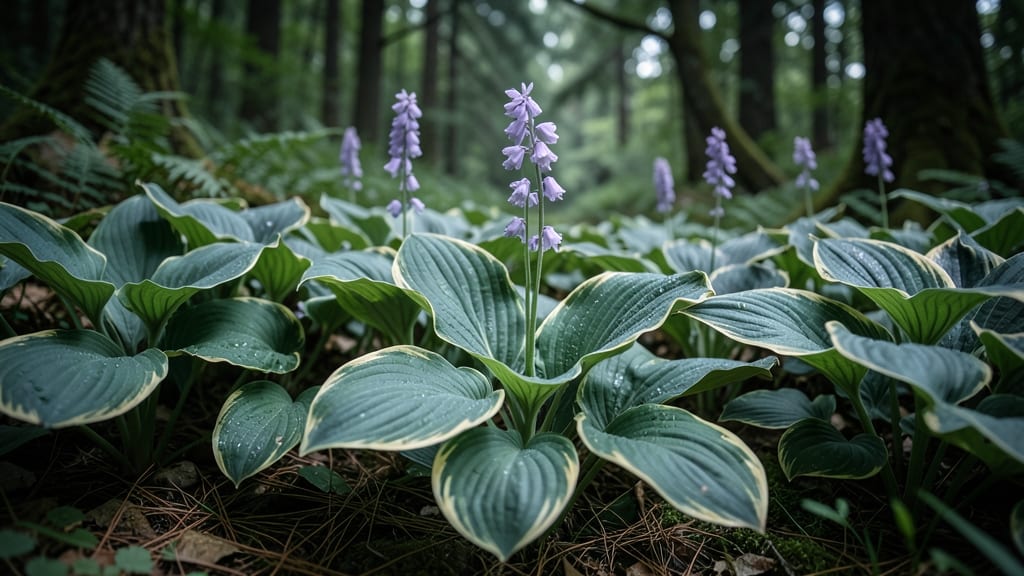
Skip the flowers for a moment—hostas are the unsung heroes of shade gardens, turning dark corners into lush, textured masterpieces. Their broad, blue-green or variegated leaves create dramatic foliage interest, while some varieties like 'Halcyon' or 'Blue Angel' even produce delicate lavender blooms in mid-summer.
Hostas thrive in full to partial shade and come in sizes from tiny tabletop varieties to giants that reach 3 feet wide. Plant them in well-draining soil with organic mulch to protect their roots, and watch them establish into bold, architectural focal points. For extra drama, pair them with ferns or astilbe to create layered shade gardens that feel like a secret woodland retreat.
Perfect for gardeners who love low-maintenance elegance, hostas require minimal care beyond occasional division every 3-4 years. Their striking foliage keeps your shade garden vibrant year-round, even when other plants have faded. 🌿
Lungwort Healing Herb with Blue Flowers
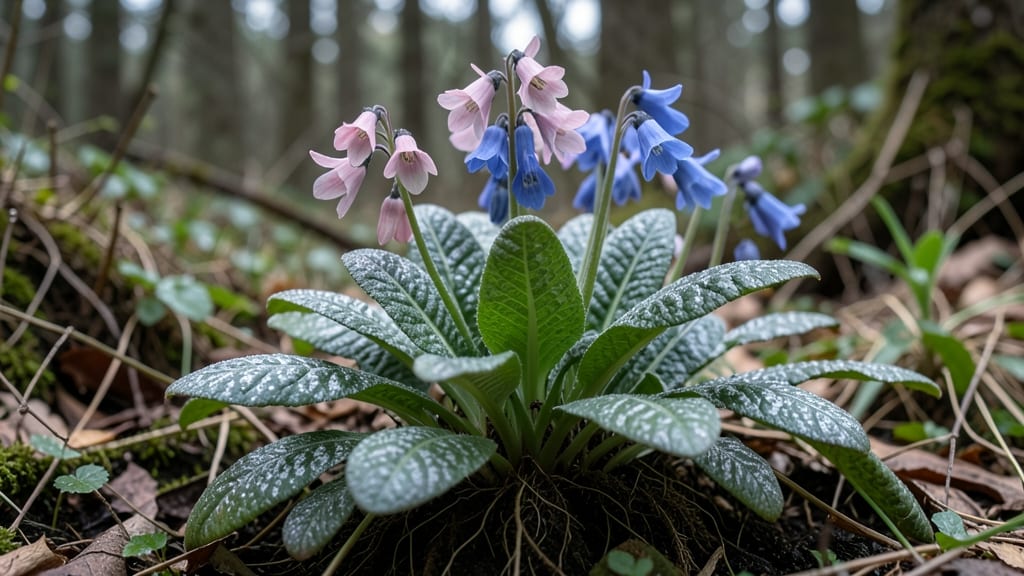
Looking for a shade-loving plant that’s as useful as it is beautiful? Lungwort (Pulmonaria) combines striking foliage with medicinal history and pollinator appeal, making it a standout for both cottage gardens and herbalists.
This hardy perennial thrives in full to partial shade and features silver-spotted leaves that turn green as they age, paired with blue-purple flowers in early spring. Historically used to treat respiratory ailments, lungwort’s flowers attract bees early in the season when few other blooms are available. Simply plant in moist, well-draining soil and let it spread naturally—it’s deer-resistant and drought-tolerant once established.
Perfect for gardeners who love multi-functional plants, lungwort adds both beauty and heritage to shade gardens while supporting local ecosystems. 💚
Astilbe Feathered Plume Flowers
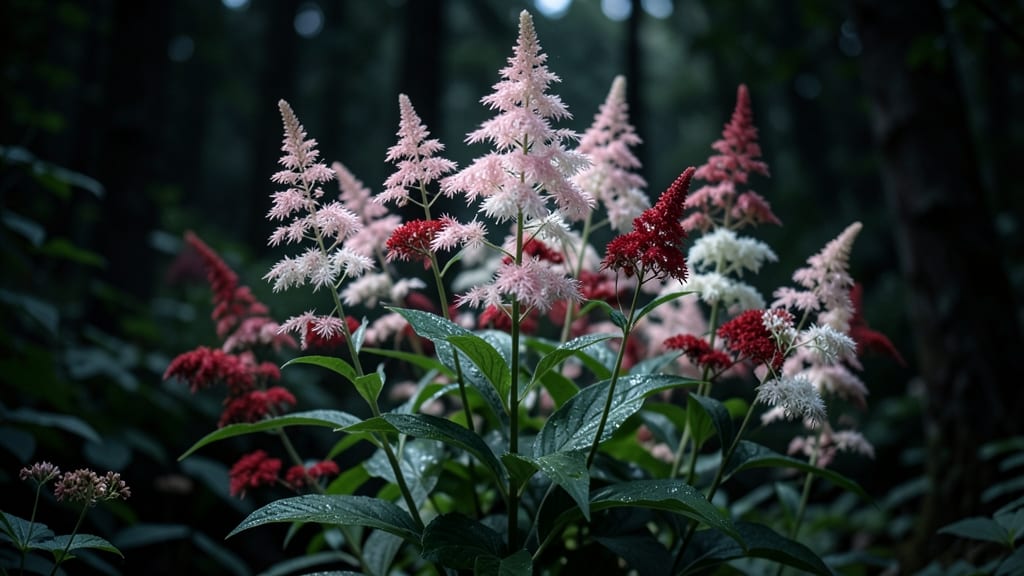
Looking to add height and drama to your dark garden corners without sunlight? Astilbe delivers ethereal, feathery plumes in soft pink, white, or fiery red that dance on slender stems—like nature’s own confetti. These shade-loving stars thrive where most flowers wilt, making them perfect for containers, borders, or woodland gardens.
Plant astilbe in moist, well-draining soil (they despise drought) and give them partial to full shade—they’ll reward you with blooms from mid-to-late summer that last for weeks. Choose dwarf varieties like ‘Fanal’ (18 inches) for containers or tall types like ‘Deutschland’ (3 feet) for dramatic garden statements. Pair them with hostas or ferns to create a lush, layered shade retreat.
Urban gardeners and small-space enthusiasts will love how astilbe transforms dark corners into romantic focal points. With minimal care and maximum impact, it’s the perfect shade plant for adding vertical interest without the sun. ✨
Toad Lily Dramatic Spotlight Plant
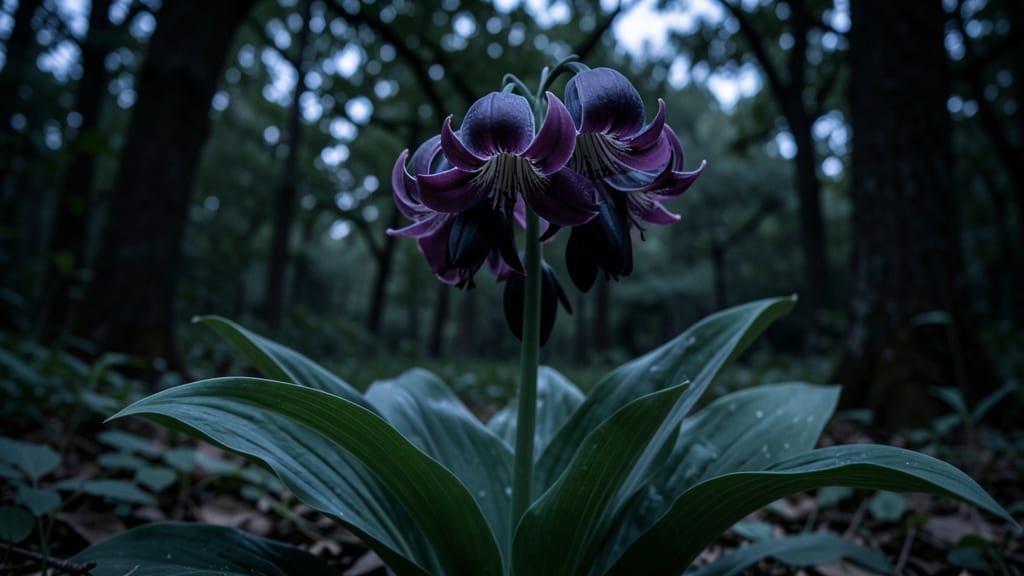
Ready to turn your darkest garden corners into a moody, artistic statement? The toad lily (Tricyrtis) delivers bold, purple-black flowers that resemble clusters of toad eggs, creating a striking focal point where most shade plants struggle. Unlike delicate blooms, these deep-hued flowers thrive in full shade and contrast beautifully against rich green or burgundy foliage.
This shade-loving perennial produces flowers from late summer through fall, making it a late-season star. Plant it in moist, well-draining soil enriched with organic matter, and give it space to spread—mature plants reach 1-2 feet tall with a similar spread. For maximum drama, pair it with heuchera or fern varieties to create a rich, textured backdrop that makes the dark blooms pop.
Perfect for gardeners who love dramatic contrast and unique textures, toad lily brings an artistic edge to woodland gardens and shaded borders. Its bold flowers will turn heads and make your darkest corners the most talked-about part of the yard. ✨
Foxglove Tall Garden Statement
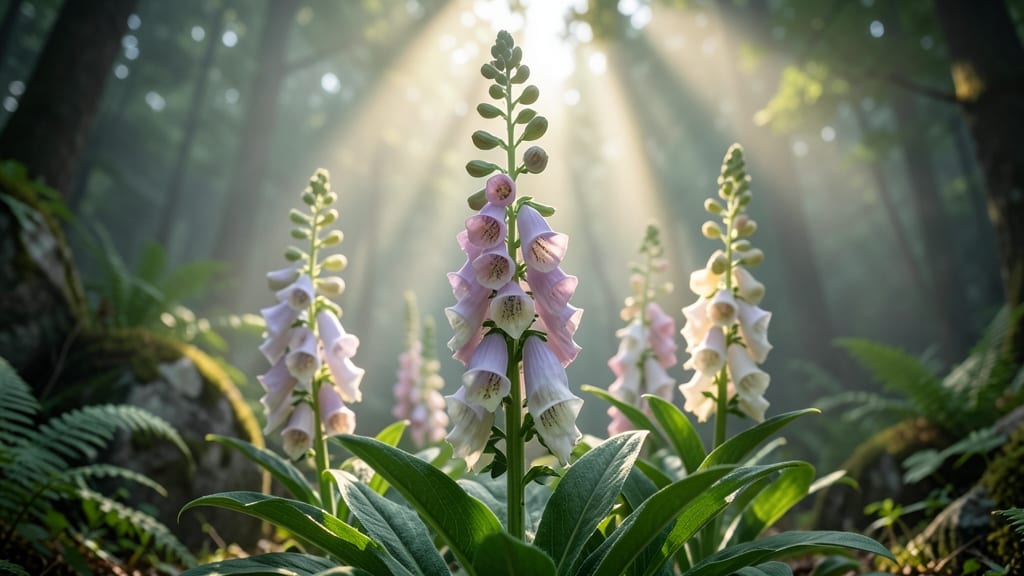
Want to instantly transform your shady garden into a fairy-tale scene? Foxglove (Digitalis) brings dramatic height and whimsy with its towering spikes of bell-shaped flowers that reach 3-5 feet tall—perfect for creating vertical interest where sunlight barely touches.
This biennial plant thrives in partial to full shade and blooms in mid-to-late summer, attracting hummingbirds with its nectar-rich flowers in shades of purple, pink, white, or yellow. Plant seeds in early spring or divide established clumps in fall, and watch them self-seed for years of magical displays. For best results, grow foxglove in moist, well-draining soil and pair it with ferns or hostas to create a lush, woodland-inspired border.
Ideal for cottage gardens, woodland escapes, and pollinator-friendly landscapes, foxglove adds a touch of enchantment that’s hard to resist. Just be mindful of its mildly toxic nature—keep it away from pets and children. ✨
Coral Bells Drought-Tolerant Blooms
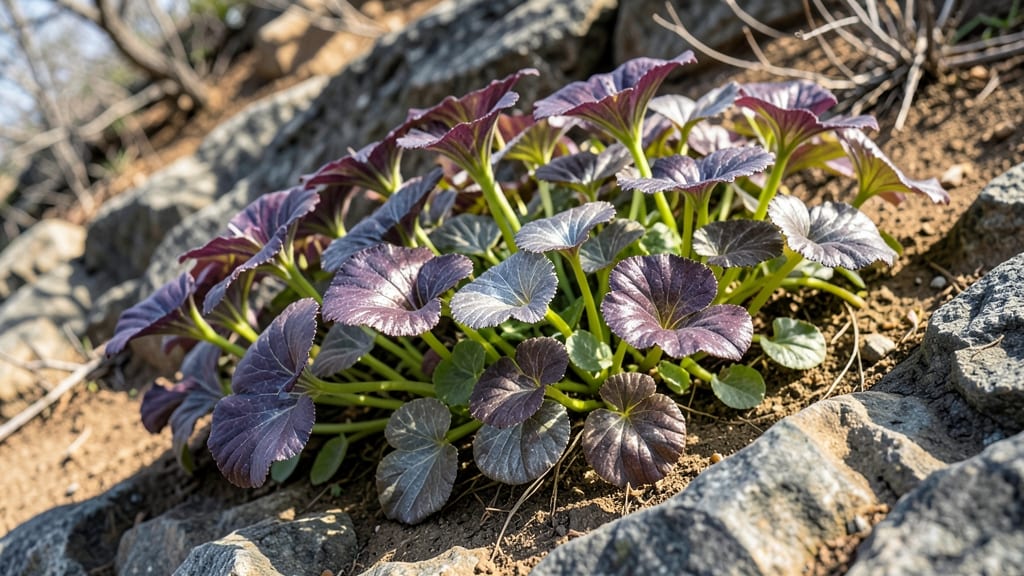
Struggling to keep your rocky slopes or dry shade areas looking vibrant? Coral bells (Heuchera) prove that drought-tolerant plants can still deliver bold color—without the fuss. This versatile perennial thrives where others struggle, offering striking foliage in deep purple, silver, or lime green paired with delicate flower spikes in red, pink, or white that dance above the leaves.
Perfect for low-maintenance gardens, coral bells require minimal water once established and prefer well-draining soil—ideal for rocky terrain or containers. Their compact size (1-2 feet tall and wide) makes them perfect for borders, edging, or cascading over walls. Deadhead spent blooms to encourage more flowers, and divide clumps every 2-3 years to keep them vigorous. For extra drama, pair with sedum or lavender in sunny spots nearby.
Urban gardeners and eco-conscious plant lovers will adore how coral bells add year-round interest with their colorful foliage, even when flowers fade. It’s the ultimate shade plant for those who crave beauty without the watering can. 💚
Sweet Rocket Fragrant Climbing Vine

Craving a fragrant garden escape that doesn’t require sunlight? Sweet rocket (Hesperis matronalis) is your secret weapon—a shade-loving climber that fills dark corners with clusters of tiny white blooms and a honey-like scent that lingers in the evening air. Unlike sun-hungry honeysuckle, this biennial vine thrives in full to partial shade, making it ideal for trellises, arbors, or fragrant pathways where other climbers fail.
Plant seeds in well-draining soil in early spring or fall, and watch it twine gracefully upward, reaching heights of 3-5 feet. The spring and early summer blooms attract pollinators like bees and butterflies, while its fern-like foliage adds lush texture. For a romantic touch, weave it through an archway or let it spill over a container—its delicate scent will turn even the gloomiest corner into a sensory delight.
Perfect for urban gardeners with limited sun or those seeking a low-maintenance fragrant focal point, sweet rocket brings old-world charm without the fuss. Just be sure to deadhead spent blooms to encourage continuous flowering—your garden’s secret scent will be the talk of the neighborhood. 🌷