
Trees
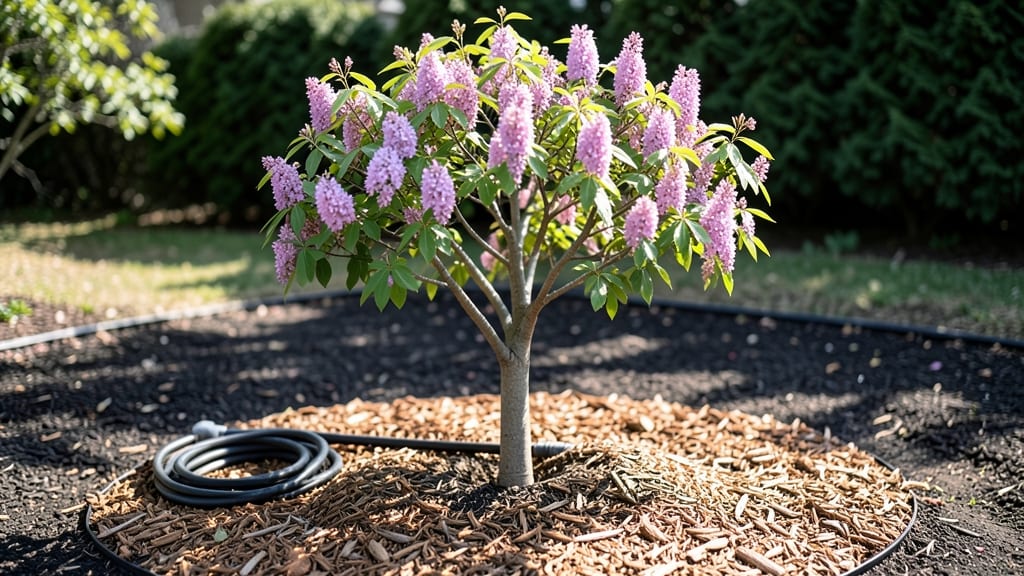
Dark corners don’t have to stay dark—dwarf shade trees bring privacy and light to tight spaces without overpowering your yard. 🌿 I’ve transformed shady nooks into cozy retreats using varieties like ‘Little Gem’ magnolia or ‘Sky Pencil’ holly, which deliver dense foliage in just 10-15 feet of height.
The key is choosing trees that mature small but still cast enough shade to create a lush, intimate atmosphere. These trees thrive where sun-starved plants struggle, offering year-round interest with glossy leaves, seasonal blooms, or striking bark. Pair them with hostas, ferns, or shade-loving perennials to layer texture and color.
A well-placed dwarf tree can anchor a garden bed, frame a patio, or even soften an unsightly corner—all while keeping your space functional. You’ll end up with a privacy screen that feels like a natural extension of your garden, not an afterthought.
The best part? Minimal pruning keeps them manageable, and their slow growth means decades of low-maintenance beauty. Whether you’re working with a postage-stamp yard or a shadowy urban alley, these trees deliver big impact with small footprints.
Works for modern minimalist gardens, cottage-style charm, or urban oases—just pick the right variety for your climate and space. Let’s bring light to those dark spots!
📚 In This Guide
- What you need
- Instructions
- Tips and common mistakes
- Wrapping up and next steps
What you need
- ● Dwarf shade tree variety: Choose from options like Amelanchier (serviceberry), Carpinus caroliniana (musclewood), Cercis canadensis ‘Lavender Twist’ (dwarf redbud), or Fagus sylvatica ‘Purpurea Tricolor’ (painted beech). Buy 1–3 mature plants (3–6 ft tall) for instant shade.
- ● Planting hole: Dig a hole 2–3 times wider than the root ball and as deep as the container. Loosen the soil at the bottom to encourage root growth.
- ● High-quality soil: Mix 50% native soil with 50% compost or peat moss for optimal drainage and nutrients.
- ● Organic mulch: Use 2–3 inches of shredded bark or wood chips (avoid fresh wood chips, which can rob nitrogen). Keep mulch 3–6 inches away from the trunk.
- ● Watering can or hose with a gentle spray nozzle: Aim for 1–2 gallons per tree after planting, then deep water 2–3 times per week for the first month.
- ○ Fertilizer (optional but helpful): A slow-release, balanced 10-10-10 fertilizer or organic options like fish emulsion (follow package rates). Apply in early spring.
- ● Garden shovel or spade (for digging)
- ● Garden trowel (for breaking up soil and placing roots)
- ● Pruning shears (to trim dead branches or shape young trees)
- ● Gloves (to protect your hands from thorns or rough bark)
- ● Measuring tape (to ensure proper spacing—6–10 ft apart for mature trees)
- ● Wheelbarrow or bucket (for mixing soil and compost)
- ● Tree stakes and ties (if planting in windy areas—use 2–3 stakes per tree)
- ● Root stimulator (like Mycorrhizal fungi powder) to boost root growth
- ● Drip irrigation system (for low-maintenance watering)
- ● Tree guard or protective wrap (to shield young trees from pests or sun scorch)
- ● Soil pH tester (to ensure your soil is slightly acidic to neutral (6.0–7.0)—most dwarf shade trees prefer this range)
Step-by-Step guide to planting dwarf shade trees
Here’s how to transform dark corners into lush, private retreats with low-maintenance trees.
🌱 Step 1: Choose the Right Tree for Your Space
Start by picking a dwarf variety suited for your climate and shade needs. Japanese maples (Acer palmatum) or serviceberry (Amelanchier) thrive in partial shade, while crepe myrtles (Lagerstroemia) handle full sun. Check the mature height—most stay under 10-15 feet, perfect for tight spaces. I always verify the tree’s light tolerance first; planting a sun-lover in deep shade guarantees slow, stunted growth.
Look for 1-3 gallon container-grown trees at nurseries—they establish faster than bare-root stock. Avoid trees with circling roots or yellowing leaves; these signs mean poor health and poor transplant success. Handle the root ball gently—compressed roots struggle to adapt.
☀️ Step 2: Pick the Perfect Planting Spot
Scan your yard for at least 6 hours of indirect light daily—most dwarf shade trees need this to flourish. Avoid spots where pavement or buildings block airflow, as stagnant air invites fungal diseases. Measure the tree’s current height and plant it 3-4 times wider than its root ball to prevent root competition.
Dig a hole twice as wide as the root ball but no deeper—planting too low suffocates roots. Loosen the sides of the hole with a shovel to reduce compaction. If your soil drains poorly, mix in 2-3 inches of compost into the bottom of the hole. This ensures roots get the nutrients they need without sitting in soggy conditions.
🪴 Step 3: Plant with Care for Long-Term Stability
Remove the tree from its container and gently tease apart any circling roots with your fingers. Place it in the hole so the top of the root ball sits 1-2 inches above ground level—this prevents rot as the soil settles. Fill the hole halfway with native soil, then water deeply to eliminate air pockets. Let the water drain completely before backfilling.
Finish by mounding soil to create a slight basin around the base. This directs water toward the roots during irrigation. Mulch with 2-3 inches of shredded bark, keeping it 6 inches away from the trunk to avoid moisture buildup. Water again until the soil is 6 inches deep and evenly moist.
💧 Step 4: Water and Protect Newly Planted Trees
For the first 2-3 weeks, water deeply every 2-3 days until the soil is 6 inches deep and damp. Dwarf trees have smaller root systems, so consistent moisture is critical. Use a soaker hose or drip irrigation to avoid wetting the leaves—this reduces fungal risks. I set a timer to remind me, as overwatering is just as harmful as underwatering.
Install a tree guard or wire cage around the trunk to deter rabbits and voles, which love young bark. Stake the tree only if it’s top-heavy or in a windy area—use two stakes at a 45-degree angle and tie loosely with rubber tree ties (never wire, which cuts into bark). Check ties monthly and loosen them as the tree grows.
✂️ Step 5: Prune and Maintain for Healthy Growth
Wait 6-12 months before pruning—this gives the tree time to establish its root system. When you do prune, remove dead, crossing, or inward-growing branches first. Cut just outside the branch collar (the swollen area where the branch meets the trunk) to encourage fast healing. Avoid heavy pruning in the first year; it stresses young trees.
Fertilize lightly in early spring with a slow-release, balanced fertilizer (10-10-10). Spread ½ cup around the drip line (the edge of the tree’s canopy), then water deeply. Over-fertilizing burns roots, so skip it entirely if your soil is already rich. Monitor for pests like spider mites or scale—spray with neem oil at the first sign of infestation to protect the tree’s delicate foliage.
Tips & tricks for perfect dwarf shade tree planting
These little details make all the difference when transforming dark corners into thriving privacy havens.
Tree Selection Wisdom: Japanese maples and serviceberries are my go-to choices for partial shade, but don't overlook dwarf hackberries (Celtis occidentalis) for urban areas—they handle pollution and compact spaces beautifully. Always check the mature height label at the nursery; some "dwarf" varieties can still reach 15 feet if given space. I've learned the hard way that planting a tree labeled "6-10 feet" in a 4-foot-wide space leads to root competition and stunted growth.
Soil Prep Secret: Before planting, test your soil's drainage by digging a hole and filling it with water. If it doesn't drain within 2 hours, you'll need to improve drainage by mixing in 2-3 inches of coarse sand or perlite with that 2-3 inches of compost mentioned in Step 2. This prevents root rot, which is especially critical for dwarf trees with limited root systems. I keep a moisture meter handy—aim for soil that stays damp but never soggy in the first 2-3 weeks after planting.
Watering Strategy: The key to successful dwarf tree establishment is consistent moisture without waterlogging. After the initial planting watering, I set up a simple drip irrigation system on a timer for 10 minutes every 2-3 days during the first 2-3 weeks. This mimics natural rainfall patterns better than manual watering. Pro tip: Water in the early morning so foliage has time to dry before evening—this prevents fungal diseases that thrive in damp conditions.
Long-Term Maintenance: Mark your calendar for early spring fertilization—this is when trees wake up from dormancy and need nutrients most. I always apply that ½ cup of 10-10-10 fertilizer around the drip line, not the trunk, to encourage outward root growth. For the first 6-12 months, resist the urge to prune unless you see dead branches. Healthy growth comes from strong roots, not aggressive pruning.
Pro Tips for Dwarf Shade Trees
- These little details make all the difference when transforming dark corners into thriving privacy havens.
- Always check the mature height label at the nursery; some "dwarf" varieties can still reach 15 feet if given space.
- Soil Prep Secret: Before planting, test your soil's drainage by digging a hole and filling it with water.
Frequently asked questions
Got questions about dwarf shade trees?
You’re not alone! Here are answers to the most common concerns—from planting tips to long-term care—so you can pick the perfect compact tree for your shady spot.
What’s the fastest-growing dwarf shade tree for quick privacy?
If you need shade fast, opt for a Japanese maple (Acer palmatum) or dwarf Korean lilac (Syringa meyeri). These grow 12–24 inches per year, offering partial shade within 3–5 years. For denser foliage, dwarf fothergilla (Fothergilla gardenii) fills in beautifully but grows slightly slower (6–12 inches/year).
How long does it take for a dwarf shade tree to provide full shade?
Most dwarf shade trees take 5–10 years to reach maturity, depending on the species. Smaller varieties like dwarf serviceberry (Amelanchier) may offer light shade in 3–4 years, while denser options like dwarf oak (Quercus) varieties take closer to a decade. Pro tip: Plant multiple trees in a cluster for faster coverage!
Can dwarf shade trees survive in hot, dry climates?
Yes! Choose drought-tolerant varieties like dwarf desert willow (Chilopsis linearis) or dwarf hackberry (Celtis occidentalis). These thrive in heat with minimal water once established. For extra protection, mulch around the base and water deeply once a week during the first growing season. Avoid soggy soil—dwarf trees hate "wet feet."
What’s a good alternative if my yard has poor, rocky soil?
Rocky or nutrient-poor soil? Try dwarf Japanese snowbell (Styrax japonicus) or dwarf ninebark (Physocarpus opulifolius ‘Little Devil’). Both tolerate challenging soil and still deliver lush shade. For acidic soil, dwarf rhododendron or dwarf azalea are excellent picks—they’ll even bloom for extra curb appeal!
How do I protect my dwarf shade tree from pests or diseases?
Prevention is key! Inspect leaves regularly for signs of spider mites or scale insects (common in dwarf trees). Treat with neem oil if needed, and prune for airflow to reduce humidity-related fungal issues. Avoid overwatering—root rot is a sneaky threat. For extra defense, plant dwarf trees with companion plants like lavender (repels pests naturally).
Bonus Tip: When’s the best time to prune?
Prune late winter or early spring (before new growth) to shape your tree and encourage fuller foliage. Avoid heavy pruning in fall—it can stress the tree before winter. Use sterilized tools to prevent disease spread, and never remove more than 25% of the canopy at once!
Wrapping up and next steps
Dwarf shade trees are the perfect solution for adding privacy and beauty to small or shady spaces without overwhelming your landscape.
Whether you’re working with tight corners, urban yards, or areas with limited sunlight, these compact powerhouses deliver lush foliage, year-round interest, and minimal maintenance—all while keeping your property cozy and stylish. 🌿
Ready to transform your space? Start by sketching your layout, choosing a tree that fits your climate and light conditions, and planting with care. With the right dwarf shade tree, you’ll enjoy a private, serene retreat in no time!