
Size
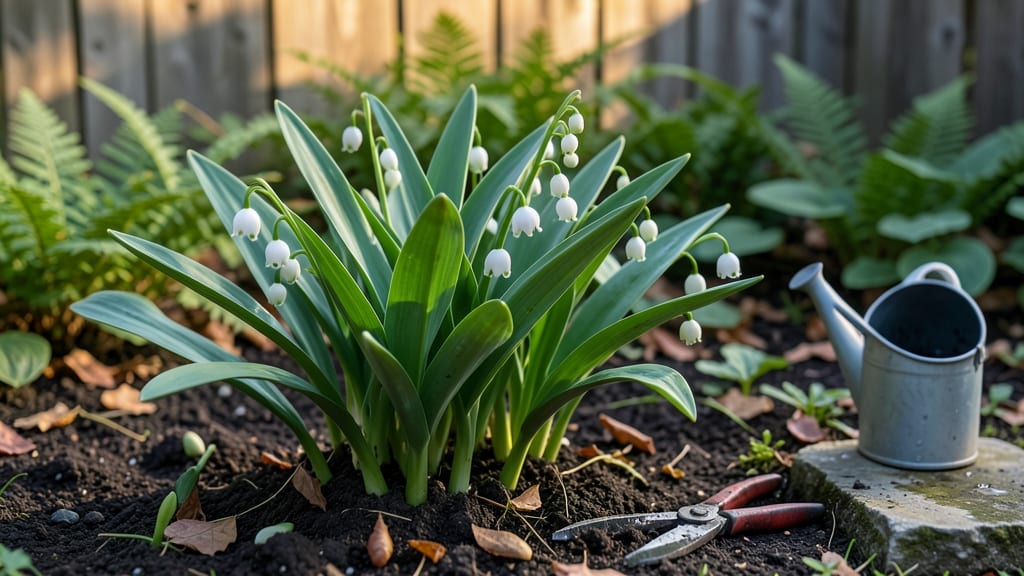
Lily of the valley grows best in shade, thriving under partial to full shade where it produces the most lush growth and abundant blooms. While it can handle light dappled shade or brief morning sun, excessive direct sunlight risks leaf scorch and fewer flowers.
This shade preference comes from its natural woodland habitat, where filtered light protects delicate leaves while maintaining ideal moisture levels. 🌿 The plant's shallow roots benefit from cooler, more stable soil temperatures found in shaded areas, which also reduces stress during hotter periods.
I've noticed that even in hotter climates, providing afternoon shade through nearby trees or structures helps maintain vibrant foliage and consistent blooming.
What's interesting is how different shade levels affect growth: deep shade may slow flowering slightly, while light dappled shade creates the perfect balance between energy capture and moisture retention.
For gardeners in sunnier regions, I recommend planting under deciduous trees that provide summer shade while allowing winter sunlight for continued growth.
💡 In This Article
- How Shade Affects Lily of the Valley Growth and Flowering
- Best Shade Conditions for Planting Lily of the Valley
How shade affects lily of the valley growth and flowering
Lily of the valley's preference for shade stems from its woodland origins, where it evolved to thrive under the protective canopy of trees. The plant's broad leaves have a waxy coating that helps retain moisture, but they're also sensitive to intense sunlight.
When exposed to direct rays, the leaves can develop brown patches from sunburn—a condition called chlorosis—while the plant's energy shifts from flowering to protecting its foliage. In shaded environments, the plant allocates more energy to root development and flower production instead.
The ideal shade level for lily of the valley falls between 30-70% light filtration, which mimics its natural habitat. This range allows enough light for photosynthesis while preventing leaf stress.
For example, planting under a deciduous tree that provides 50% shade during summer months creates perfect conditions—cooling the soil by 5-10°F compared to full sun, which helps maintain consistent moisture levels. The roots, which spread horizontally just below the surface, benefit from this cooler environment, promoting stronger growth.
Flowering frequency directly correlates with light exposure. In deep shade (20% light), you might see fewer blooms as the plant conserves energy for survival.
Conversely, light dappled shade (50-70% light) produces the most abundant flowers, with each stem bearing 6-12 bell-shaped blooms instead of the typical 3-5 in sunnier conditions.
The flowers themselves are more vibrant when grown in shade, with deeper pink or white hues due to reduced stress on the plant's pigments.
Temperature regulation is another critical factor. Shaded areas maintain soil temperatures around 65-75°F even on hot days, while full sun can push temperatures above 85°F, causing root stress. This temperature difference explains why lily of the valley often thrives in northern climates where shade is more prevalent.
In hotter regions, afternoon shade becomes crucial—without it, the plant may enter dormancy earlier in the season or produce fewer flowers the following year.
One fascinating adaptation is how lily of the valley adjusts its growth pattern based on light levels. In lower light, the plant grows more vertically to reach available light, while in ideal shade conditions, it spreads horizontally through rhizome expansion.
This horizontal growth creates dense colonies that outcompete weeds naturally. The trade-off? In deep shade, the plant may become leggy as it stretches for light, while in full sun, it becomes compact but stressed.
For gardeners, understanding these shade effects means strategic placement is key. A spot with morning sun and afternoon shade often works best in warmer climates, while cooler regions can handle more consistent shade.
The plant's ability to tolerate 2-4 hours of morning sun makes it versatile for patios or garden edges where full shade isn't available. 🌿