
Size
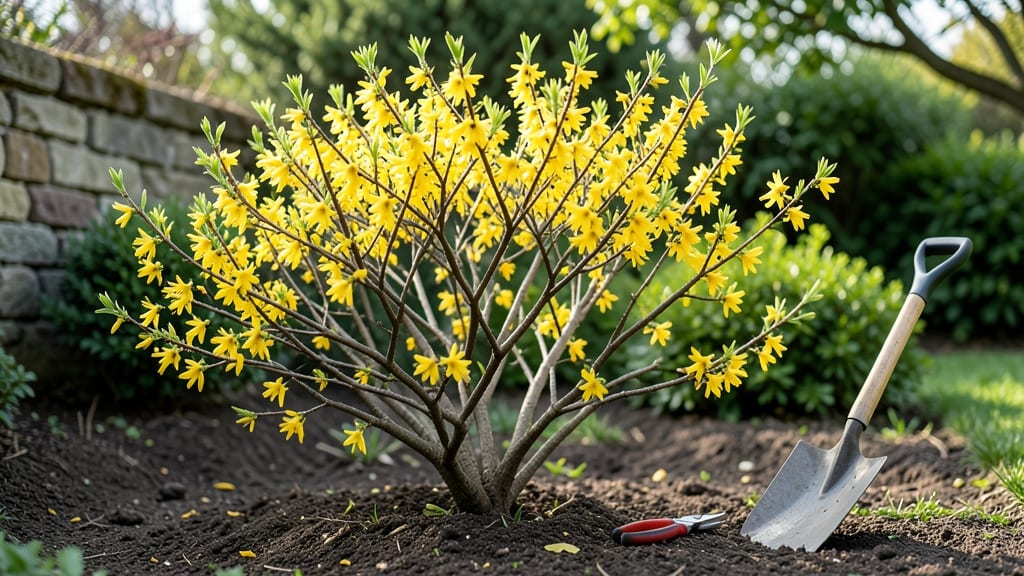
Forsythia grows poorly in shade, thriving best in full sun where it produces vibrant yellow blooms. Partial shade may limit flowering but won’t kill the plant, though growth will be slower and stems less sturdy. Choose a sunnier location for optimal performance.
Forsythia bushes actually struggle to survive in deep shade, where they may produce sparse foliage and almost no flowers. 🌿 The lack of sunlight disrupts chlorophyll production, weakening the plant's ability to convert energy.
Even partial shade—like morning sun with afternoon filtering—can reduce bloom intensity by up to 70%, though the plant itself may persist for years with minimal care.
If you're working with limited light, focus on positioning the bush near a south-facing wall or pairing it with taller, sun-loving perennials that won’t compete for light.
For existing shaded forsythias, you can prune strategically to encourage denser growth—cut back leggy stems in early spring to redirect energy toward new shoots. Adding compost-rich soil and a slow-release fertilizer in late winter can also help compensate for the light deficit.
Just remember: while forsythia is resilient, it’ll never reach its full potential without adequate sunlight.
💡 In This Article
- Forsythia Light Requirements: Sun vs Shade Trade-Offs
- Maximizing Forsythia Growth in Low-Light Spots
Forsythia light requirements: sun vs shade trade-offs
Forsythia's light needs stem from its native habitat in woodlands and open meadows, where it evolved to thrive in 6-8 hours of direct sunlight daily. When sunlight hits its leaves, chlorophyll absorbs photons to power photosynthesis, but shade reduces this process by up to 40%.
This energy deficit forces the plant to prioritize survival over flowering, often resulting in sparse, dark green foliage and minimal blooms. 🌞 The key hormone here is florigen, which triggers bloom formation—sunlight is its primary activator.
In full sun, forsythia produces 2-3 times more flowers than in partial shade, thanks to higher photosynthesis rates. The stems also develop stronger structural support, growing 1-2 feet taller annually compared to stunted growth in shade.
For example, a forsythia in 6 hours of sun may reach 8 feet over 5 years, while one in 3 hours might stay under 4 feet. The yellow blooms themselves contain carotenoids that require sunlight to synthesize properly—shade often dulls their vibrancy.
What most gardeners overlook is how shade affects the plant's internal clock. Forsythia follows photoperiodism, meaning it needs consistent daylight to regulate growth cycles. In deep shade, this rhythm disrupts, leading to erratic blooming or none at all.
The leaves also become thicker and darker as a shade adaptation, reducing their efficiency at capturing light. This is why even "partial shade" (like dappled sunlight) can still limit flowering by 50-70% compared to full sun.
Soil moisture plays a secondary role here—shaded forsythias often develop shallow root systems because they can't photosynthesize enough to support deeper growth. This makes them more susceptible to drought stress. 💧 In contrast, sun-exposed plants develop robust root networks that access water and nutrients more effectively.
The trade-off is clear: less light means more maintenance to compensate for the plant's weakened natural defenses.
For visual comparison, imagine two forsythias side by side: one in full sun bursts with bright yellow clusters covering its branches, while the shaded counterpart produces sparse, pale blooms and leggy stems.
The difference isn't just aesthetic—it's biological. Sunlight isn't just light; it's the fuel that drives every aspect of forsythia's growth and reproduction.
If you're dealing with a shaded forsythia, the first step is to assess how much light it actually receives. Use a light meter or observe the area's sunlight patterns over a week—note when direct rays hit and for how long.
This data will help you decide whether to relocate the plant or implement targeted solutions to maximize its limited light exposure.