
Light Requirements
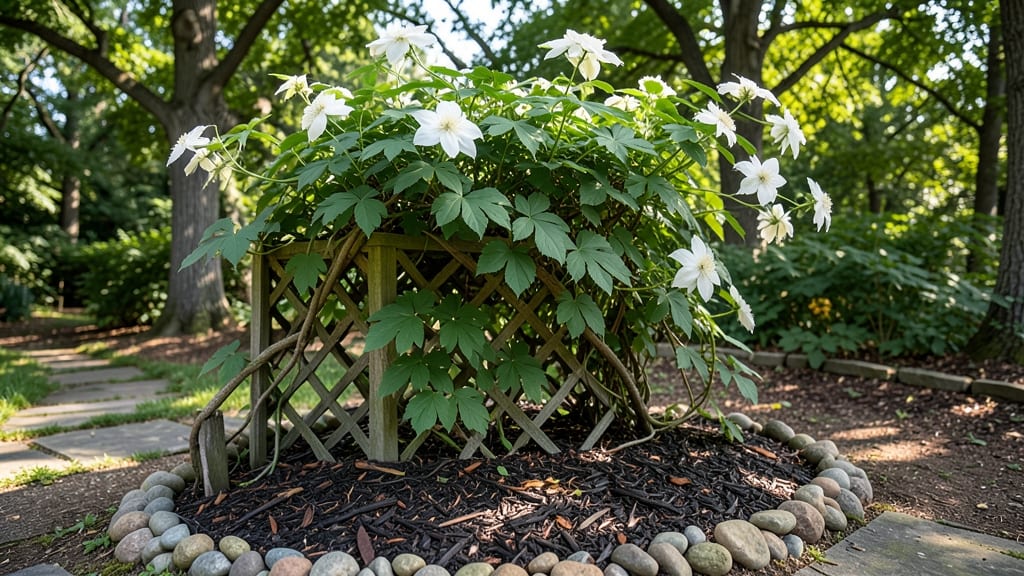
Growing clematis in full shade is easier than you think—these vines thrive with just 3-4 hours of morning sun. 🌿 I’ve grown clematis under towering maples and evergreens, and the right varieties produce stunning blooms even in deep shade.
The secret lies in soil prep, watering consistency, and choosing shade-tolerant cultivars that naturally grow in woodland edges.
Start with well-draining, rich soil mixed with compost—clematis roots need oxygen, not soggy conditions. Mulch heavily to retain moisture and keep roots cool. Water deeply 2-3 times per week (more in extreme heat), as shade slows evaporation but doesn’t eliminate the need for consistent moisture.
Varieties like ‘Jackmanii’ or ‘Nelly Moser’ (when given afternoon shade) handle low light better than sun-lovers like ‘Henryi’.
You’ll see glossy, deep-green leaves within weeks, and with proper care, expect blooms by mid-summer—though they may be smaller than full-sun plants. The key is pruning for light: trim back leggy growth in early spring to encourage bushier, more productive vines that reach for any available light.
Patience pays off—shade-grown clematis often outlasts their sun-happy cousins.
Troubleshoot yellowing leaves by checking drainage (clematis hate wet feet) and boosting organic matter. Brown tips? Increase humidity with a nearby water feature or pebble tray. With these adjustments, your shade clematis will become the neighborhood’s best-kept secret—lush, low-maintenance, and full of unexpected blooms.
📚 In This Guide
- What you need
- Instructions
- Tips and common mistakes
- Wrapping up and next steps
What you need
- ● Clematis plants: Choose shade-tolerant varieties like Clematis montana, Clematis armandii, or Clematis viticella (dwarf varieties). Quantity: 1-3 plants per garden bed.
- ● Well-draining potting mix or garden soil: Amend with 30-50% compost or organic matter (e.g., leaf mold or peat moss) to improve fertility and moisture retention.
- ● Mulch: 2-3 inches of organic mulch (e.g., shredded bark or pine needles) to retain moisture and regulate soil temperature.
- ● Support structure: For vining varieties: A 5-6 foot trellis, arbor, or sturdy fence (avoid flimsy stakes).
- ● For bushy varieties: A small obelisk or decorative post (3-4 feet tall).
- ● Slow-release fertilizer: Balanced 10-10-10 or organic options like fish emulsion or worm castings (apply 2-3 times per season).
- ● Garden tools: Trowel or hand shovel
- ● Pruning shears (sterilized)
- ● Garden gloves
- ● Watering can or hose with a gentle spray nozzle
- ○ Soil test kit: Optional but helpful to check pH (ideal range: 6.0-7.0 for shade clematis).
- ● Epsom salt: 1 tablespoon per plant (dissolved in water) every 4-6 weeks for magnesium boost.
- ● Shade cloth: Lightweight (30-50%) for seedlings or areas with partial shade fluctuations.
- ○ Decorative accents: Optional but fun—add moss, rocks, or companion plants (e.g., ferns or hostas) for a lush, woodland vibe.
How to grow clematis successfully in full shade
With the right varieties and care, clematis can thrive even in the shadiest corners of your garden.
🌱 Step 1: Select the Right Shade-Tolerant Varieties
Not all clematis varieties tolerate full shade, but some stand out for their ability to flourish with minimal sunlight. Look for varieties like 'Jackmanii', 'Niobe', or 'Perle d'Azur'—these are proven performers in low-light conditions. I always check the plant tag for phrases like "partial shade" or "woodland clematis," as these indicate better adaptability.
These shade-tolerant varieties focus their energy on leaf production rather than blooms, so expect lush foliage that creates a beautiful vertical backdrop. If you want flowers, prioritize varieties that produce blooms on old wood, like 'Jackmanii', which can still deliver stunning blooms even with just a few hours of dappled light.
🪴 Step 2: Prepare the Planting Site with Rich, Moist Soil
Clematis in full shade needs well-draining but moisture-retentive soil to prevent root rot while providing consistent hydration. Amend your garden soil with 3-4 inches of compost to improve fertility and structure. I like to work in a mix of peat moss or coconut coir to help retain moisture without compacting.
Choose a location where the soil stays consistently moist but never soggy. A spot near a north-facing wall or under tall trees with filtered light works best. Avoid areas where water pools after rain—clematis roots will rot if they sit in standing water. If your soil drains poorly, consider planting in a large container with a mix of 50% potting soil, 30% perlite, and 20% compost for better control.
☀️ Step 3: Plant at the Correct Depth and Provide Support
Clematis roots need depth and stability, so dig a hole twice as wide as the root ball but only as deep as the top of the root ball. This prevents the crown from being buried too deeply, which can cause rot. Gently loosen the roots if they’re circling and position the plant so the top of the root ball sits just below soil level. Backfill with the amended soil, tamping lightly to remove air pockets.
Install a strong trellis, arbor, or obelisk at planting time—clematis vines grow aggressively and need immediate support. I use a 5-foot-tall metal trellis for vertical growth, securing it firmly before weaving the first tendrils through. Avoid plastic supports; they can break under the weight of mature vines. Water deeply after planting to settle the soil and encourage root establishment.
💧 Step 4: Water Consistently and Mulch to Retain Moisture
Full-shade clematis requires consistent moisture, especially during the first growing season. Water deeply 2-3 times per week until the plant is established, ensuring the soil stays evenly moist but not waterlogged. You’ll know it’s right when the top 2 inches of soil feel damp but not soggy. In hotter months, increase watering to daily if the soil dries out quickly.
Apply a 3-inch layer of mulch around the base of the plant, keeping it 6 inches away from the stem to prevent rot. I use shredded bark or wood chips, which break down slowly and improve soil structure over time. Mulch also helps regulate soil temperature and reduces evaporation, which is crucial in full shade where sunlight doesn’t warm the soil.
✂️ Step 5: Prune Strategically for Health and Bloom
Shade-grown clematis typically requires minimal pruning, but a light cleanup in early spring keeps the plant healthy. Remove any dead or damaged stems first, then trim back any overcrowded growth to improve airflow. For varieties that bloom on old wood, like 'Jackmanii', avoid heavy pruning—just shape the plant to encourage a balanced form.
If your clematis produces flowers, deadhead spent blooms to redirect energy into new growth. I use clean, sharp pruners to make cuts just above a leaf node, which encourages branching. In late winter, you can do a light structural prune to open up the center of the plant and improve light penetration to lower leaves. Never prune more than one-third of the plant at a time, as this can stress shade-adapted clematis.
Tips & tricks for thriving clematis in full shade
Here's what nobody tells you about growing clematis in low-light conditions—these tricks make all the difference.
Variety Selection Insight: When choosing shade-tolerant clematis, prioritize those labeled "woodland" or "partial shade" varieties. These plants have evolved to handle lower light conditions by focusing energy on leaf production rather than blooms. For example, 'Niobe' produces deep purple foliage that thrives with minimal sunlight, while 'Jackmanii' can still deliver flowers with just a few hours of dappled light. I've found that checking the plant tag for these specific descriptors saves you from disappointment later.
Soil Preparation Strategy: The 3-4 inches of compost specified in Step 2 is non-negotiable for shade-grown clematis. This isn't just about adding organic matter—it's about creating a moisture-retentive environment that mimics the plant's natural woodland habitat. For container growing, that 50-30-20 mix of potting soil, perlite, and compost creates perfect drainage while maintaining consistent moisture. I've seen shade clematis fail spectacularly in regular garden soil that dries out too quickly.
Support System Secret: Don't underestimate the importance of that 5-foot metal trellis in Step 3. Clematis vines grow aggressively even in shade, and plastic supports simply can't handle the weight. I've had to replace several flimsy garden supports after they collapsed under mature vines. Install the trellis at planting time—this prevents damage to established roots later. For heavy vines, consider adding guy wires for extra stability.
Watering Wisdom: The 2-3 times per week watering schedule in Step 4 needs adjustment based on your specific shade conditions. In deep shade under dense tree canopies, I've found that daily watering may be necessary during summer months when soil doesn't warm up to evaporate moisture naturally. Always check that top 2 inches of soil—if it's dry at this depth, water immediately. Mulching with shredded bark helps maintain this moisture balance by reducing evaporation from the soil surface.
Pro Tips for Clematis Full Shade
- Here's what nobody tells you about growing clematis in low-light conditions—these tricks make all the difference.
- Variety Selection Insight: When choosing shade-tolerant clematis, prioritize those labeled "woodland" or "partial shade" varieties.
- Soil Preparation Strategy: The 3-4 inches of compost specified in Step 2 is non-negotiable for shade-grown clematis.
Frequently asked questions
Got questions about growing clematis in full shade? You’re not alone! Here are some of the most common concerns—and expert-friendly answers—to help you cultivate stunning vines even in low-light spots.
Can clematis really thrive in full shade?
While most clematis love sunlight, shade-tolerant varieties (like ‘Jackmanii’ or ‘Molly Sanderson’) can flourish with 4–6 hours of dappled light. Avoid dense, dark shade—opt for spots near trees or north-facing walls where indirect light filters through. Just ensure good air circulation to prevent fungal issues.
How long does it take for shade-grown clematis to bloom?
Patience is key! Shade-adapted clematis may take 2–3 years to establish roots and bloom. Early-season varieties (like ‘Nelly Moser’) often produce flowers faster than late bloomers. Prune strategically in late winter to encourage new growth—but avoid heavy cuts if flowers appear early.
What’s the best soil mix for full-shade clematis?
Rich, moist-but-well-draining soil is critical. Amend heavy clay with compost or peat moss, and mix in slow-release fertilizer (high in phosphorus for roots). Mulch with organic matter (like leaf litter) to retain moisture. Test soil pH—aim for 6.0–7.0 for optimal nutrient uptake.
Why are my shade-grown clematis leaves yellowing?
Yellow leaves often signal overwatering, poor drainage, or nutrient deficiency. Check for soggy roots—clematis hate “wet feet.” If leaves are pale, boost iron with a chelated supplement. Fungal issues (like powdery mildew) can also strike in humid shade; space plants for airflow and treat with neem oil if needed.
Are there non-flowering clematis varieties for full shade?
Yes! If blooms aren’t your goal, try ‘Foetid’ (stinking clematis) or ‘Viticella’ types for lush foliage and minimal care. Even flowering varieties like ‘Alba Luxurians’ (white, fragrant blooms) tolerate shade well. Focus on leaf texture and growth habit—some varieties prioritize height or trailing beauty over flowers.
Wrapping up and next steps
Growing clematis in full shade may seem challenging, but with the right varieties and care, you can create a stunning, low-light garden oasis! 🌿 From the Clematis montana to Clematis armandii, these resilient climbers prove that shade doesn’t mean sacrificing beauty.
Remember to prioritize moist, well-draining soil and support structures to set your plants up for success.
Ready to transform your shady spots? Start by selecting a shade-loving variety from our list, then plant and nurture with confidence. Happy gardening—your clematis will thank you with vibrant blooms year after year! 🌸