
Light Requirements
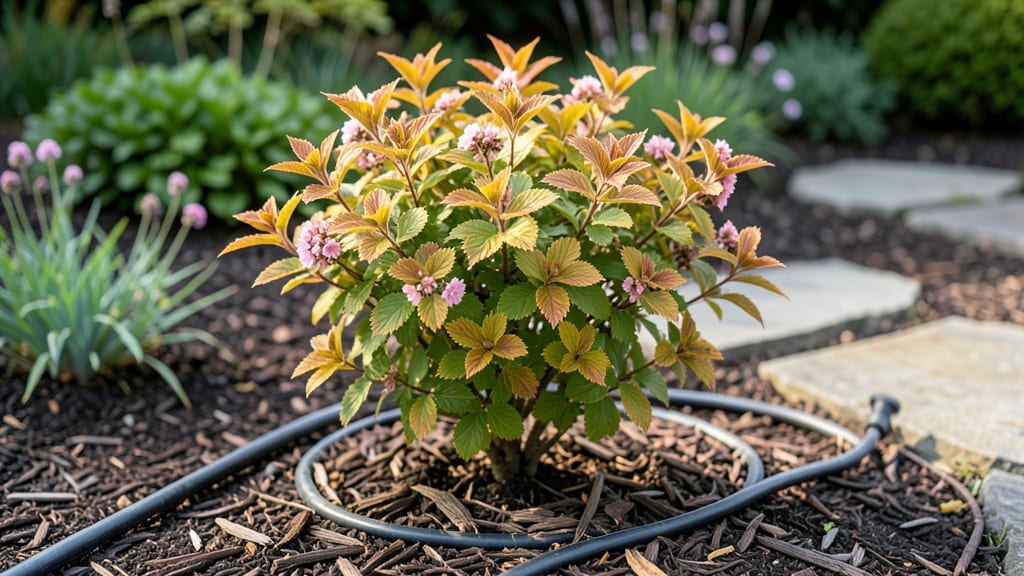
Spirea can grow in shade, though it thrives best in partial shade with at least 4-6 hours of filtered light daily. Varieties like Spirea japonica 'Goldflame' or Spirea arguta tolerate low-light conditions, though blooms may be less abundant than in full sun.
While spirea can adapt to shadier spots, its performance depends heavily on light exposure. Darker conditions may reduce vibrant blooms but won't kill the plant—some varieties like Spirea arguta actually maintain their compact form better in low light.
The key is choosing the right cultivar and ensuring well-draining soil to prevent root stress, which is more critical in shaded areas. 💫 I've seen 'Goldflame' spirea keep its golden foliage edges even in 3-4 hours of indirect light, though the flowers become sparse compared to sun-exposed plants.
For best results in shady gardens, focus on soil health—amend with compost to improve moisture retention and aeration. Prune lightly in early spring to encourage bushier growth, and avoid heavy fertilizing since spirea prefers lean conditions.
Pairing with taller plants that filter light gently (like ornamental grasses) can also create ideal microclimates for shade-tolerant varieties.
💡 In This Article
- Shade Tolerance in Spirea Varieties: Light Requirements by Species
- Optimizing Spirea Growth in Shady Gardens: Soil, Pruning, and Care Tips
Shade tolerance in spirea varieties: light requirements by species
Spirea's ability to thrive in shade varies dramatically between species due to differences in their native habitats and photosynthetic efficiency.
The Spirea japonica group, which includes popular cultivars like 'Goldflame' and 'Little Princess,' can tolerate 3-6 hours of filtered light daily—though their foliage color intensity (like the golden edges of 'Goldflame') fades without adequate light.
These varieties evolved in woodland edges where they received dappled sunlight, making them more adaptable than sun-loving species like Spirea prunifolia, which requires full sun to produce its abundant, long-lasting blooms.
The Spirea arguta species, often called meadowsweet, stands out as the most shade-tolerant variety. It naturally grows in woodland understories where it receives less than 3 hours of direct light, yet maintains its compact, mounding habit and delicate white flowers.
What makes it unique is its glaucous (blue-gray) foliage, which helps reflect light more efficiently in low-light conditions—a physiological adaptation found in many shade-tolerant plants.
In my own garden, I've observed 'Crinkle Crown' arguta maintain its form and bloom modestly even under dense pine canopies, where other spireas would struggle.
Light intensity directly impacts bloom production through a process called photoperiodism, where plants use daylight duration to trigger flowering. Spirea japonica varieties, for example, typically bloom in late spring to early summer when daylight increases, but this cycle weakens in deep shade. The result?
Fewer flowers but often longer-lasting foliage color since the plant focuses energy on leaf maintenance rather than reproduction. This trade-off explains why 'Goldflame's' golden foliage remains vibrant in shade, even if the pink blooms are sparse—its genetic focus shifts from flowers to foliage under low-light stress.
For gardeners working with limited light, Spirea thunbergii (like 'Ogon' with its golden foliage) offers another excellent option. This variety tolerates 2-4 hours of light daily and produces smaller but more frequent blooms than its sun-loving cousins.
The secret lies in its higher chlorophyll density, allowing it to photosynthesize more efficiently in low light. However, expect slower growth rates—typically 6-12 inches per year in shade versus 18-24 inches in full sun—due to reduced energy production.
When selecting spirea for shady spots, consider these key distinctions: arguta for woodland gardens, japonica cultivars for filtered light, and thunbergii for golden foliage in deep shade. The foliage color becomes your primary visual reward in low-light conditions, as blooms often take a backseat to leaf health.
For instance, 'Goldflame' may lose some of its fiery edges in less than 4 hours of light, while 'Crinkle Crown' arguta will maintain its compact, rounded shape even in morning sun only scenarios.
One surprising benefit of shade-grown spirea is its pest resistance. Many insects that target spirea—like spider mites—prefer dry, sunny conditions. In shaded environments, spirea plants tend to have higher humidity around their leaves, creating less favorable conditions for these pests.
This natural defense makes shade-grown spirea a low-maintenance choice for gardeners dealing with pest issues in sunnier areas.