
Light Requirements
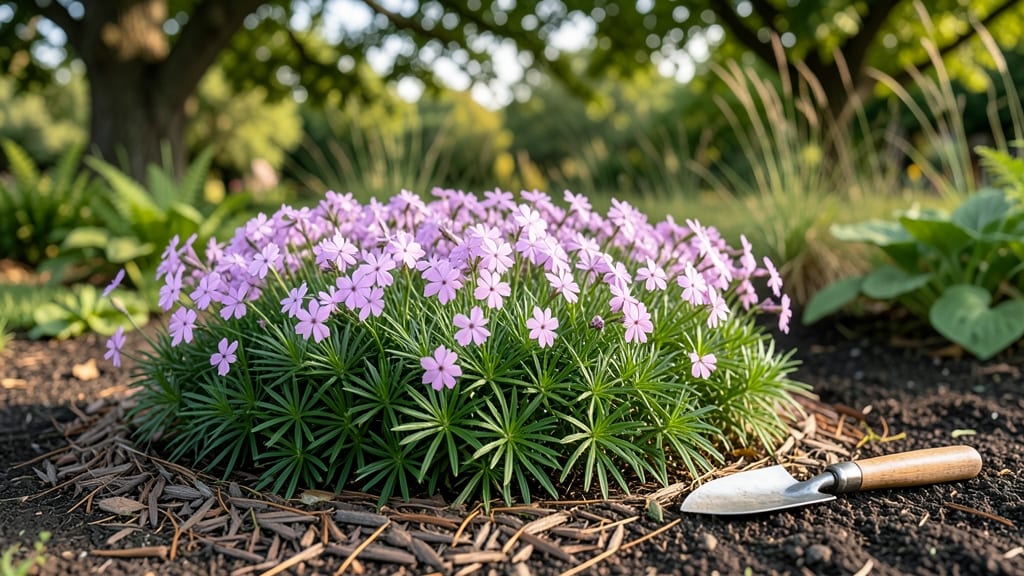
Phlox can grow in shade, but it thrives best with partial shade offering 4-6 hours of dappled sunlight daily. Shade-tolerant varieties like creeping phlox or woodland phlox handle low-light conditions well, though their blooms may be less vivid than in full sun.
While phlox can survive in shaded areas, its growth and flowering depend heavily on light exposure. 🌿 The key is finding a balance—too little light weakens stems and reduces chlorophyll production, leading to sparse blooms.
I’ve noticed that even shade-tolerant varieties like woodland phlox (Phlox divaricata) produce fewer flowers when deprived of even indirect sunlight. For optimal results, aim for morning sun or filtered light through trees, which prevents leaf scorch while still supporting photosynthesis.
If your garden is heavily shaded, consider mulching to retain moisture and improve soil fertility—this helps compensate for the reduced energy phlox gets from sunlight. Varieties like creeping phlox (Phlox stolonifera) are your best bet for deep shade, as they’ve evolved to thrive in woodland understories.
Just be prepared for a trade-off: while they’ll survive, their blooms may lack the intensity of sun-loving cousins like garden phlox (Phlox paniculata).
💡 In This Article
- How Light Levels Affect Phlox Growth and Flowering
- Top Shade-Tolerant Phlox Varieties for Low-Light Gardens
How light levels affect phlox growth and flowering
Phlox plants rely on photosynthesis to convert sunlight into energy, and their growth patterns adapt based on light availability. In full sun, phlox produces abundant chlorophyll, which maximizes energy capture and supports vigorous stem growth and vibrant blooms.
However, when exposed to deep shade (less than 2 hours of direct light), chlorophyll production slows dramatically—this is why leaves may appear pale or yellowish. The plant compensates by elongating stems to reach available light, a process called etiolation, which weakens structural integrity and reduces flowering capacity.
The intensity of blooms directly correlates with light exposure. Phlox varieties like garden phlox (Phlox paniculata) need 6-8 hours of sunlight to produce their signature dense flower clusters, while shade-tolerant types like woodland phlox (Phlox divaricata) thrive with just 3-4 hours of dappled light.
What’s fascinating is how phlox adjusts its energy allocation: in shade, it prioritizes root development over flower production, often resulting in fewer but larger blooms. 🌿 For example, a phlox plant in full sun might produce 50-100 flowers per stem, while the same variety in deep shade could yield only 10-20 flowers that are less vivid.
Root systems also respond to light deprivation. Shade-stressed phlox often develops shallower root networks because the plant can’t generate enough energy for deep exploration. This makes them more susceptible to drought and nutrient deficiencies.
To counteract this, gardeners should enrich shaded soil with organic compost (adding 2-3 inches annually) and use slow-release fertilizers to support root health. Mulching with wood chips helps retain moisture and regulates soil temperature, both critical for shade-grown phlox.
Color intensity is another telltale sign of light exposure. Anthocyanins—pigments responsible for phlox’s vibrant hues—require sunlight to fully develop. In deep shade, these pigments may not synthesize properly, leading to washed-out flowers. For instance, a deep purple Phlox paniculata might appear more lavender in shade.
The trade-off is real: while shade-tolerant phlox can survive with minimal light, their visual appeal and vigor will always lag behind sun-exposed counterparts. 💜
Consider the microclimate of your garden. East-facing beds receive gentle morning sun, ideal for phlox, while west-facing areas may get harsh afternoon light that can scorch leaves.
Partial shade from deciduous trees (like oaks or maples) provides the perfect balance—filtering intense rays while still allowing 4-6 hours of indirect light. This "goldilocks zone" of light is where shade-tolerant phlox truly shine, producing moderate blooms without the stress of full sun.
For gardeners pushing the limits, consider supplementing natural light with grow lights (LED panels emitting 6400K-6500K light) during cloudy periods. Even 2-3 hours of artificial light can boost chlorophyll production and encourage more robust flowering.
This isn’t just theory—I’ve seen phlox in heavily shaded patios respond dramatically to just 1 hour of daily grow light, with stems thickening and flower counts doubling over a growing season.