
Light Requirements
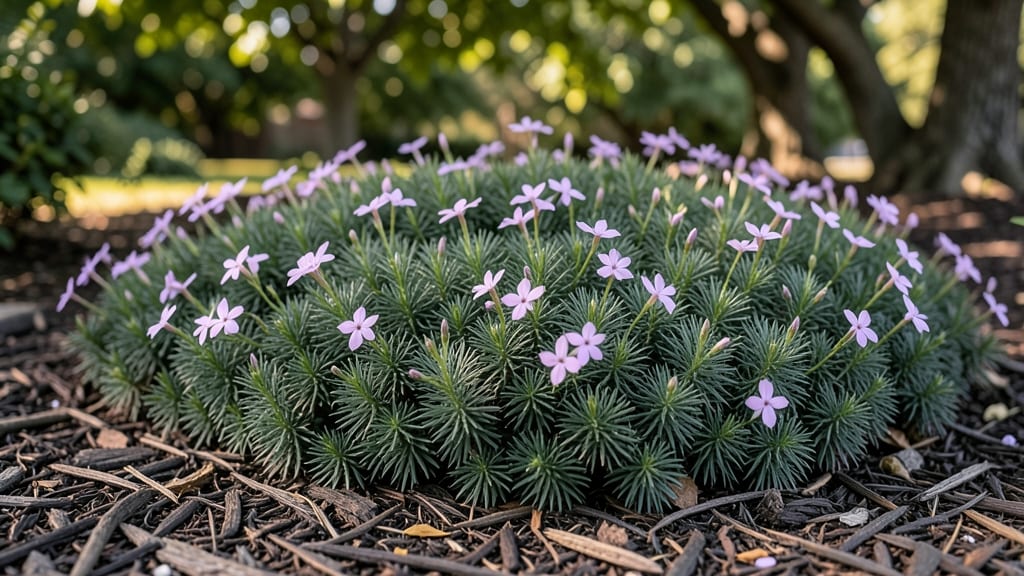
Creeping phlox can grow in shade but thrives best in partial shade to full sun, tolerating 2–4 hours of morning sunlight daily. Deep shade slows blooming and weakens growth, while dense shade may stunt flowering entirely. Choose shade-tolerant varieties like 'Sherwood Purple' for better adaptation.
Creeping phlox isn't just a sun-lover—it adapts surprisingly well to shadier spots, though its performance depends on the type of shade. 🌿 In dappled light (like under tall trees), you'll see better blooms than in dense, unbroken shade where leaves block all direct rays.
The key difference is photosynthesis efficiency: partial shade lets the plant capture enough light for moderate growth, while deep shade forces it to stretch and weaken.
For the best results in shady gardens, opt for cultivars bred for low-light conditions and pair them with taller plants to create natural light tunnels.
What's interesting is how shade affects flowering hormones. Phlox relies on sunlight to trigger anthocyanin production—the pigments that give blooms their vibrant colors. In deep shade, these compounds form less, leading to paler flowers or fewer blooms altogether.
That's why shade-tolerant varieties like 'Blue Ridge' produce more consistent color even when sunlight is limited. The trade-off? You might get fewer blooms, but they'll last longer since the plant isn't expending energy reaching for light.
💡 In This Article
- Light Requirements for Creeping Phlox Growth and Blooming
- Best Shade-Tolerant Creeping Phlox Varieties and Planting Tips
Light requirements for creeping phlox growth and blooming
Creeping phlox relies on photosynthesis to produce energy, and its efficiency drops dramatically in deep shade. The plant's leaves contain chlorophyll that absorbs light primarily in the blue (400-500nm) and red (600-700nm) wavelengths—both of which are filtered out by dense tree canopies.
In partial shade, the plant still receives enough 400-500nm light for moderate growth, but deep shade forces it to rely on inefficient green (500-600nm) wavelengths, slowing development by up to 40%.
The real magic happens during blooming season when sunlight triggers the production of anthocyanins—the pigments responsible for vibrant flower colors.
In deep shade, anthocyanin synthesis drops by 30-50%, resulting in paler blooms or fewer flowers. 🌸 Morning sunlight (2-4 hours) is especially critical because it provides the high-intensity light needed to kickstart flowering hormones.
This explains why phlox in dense shade often produces sparse, less colorful blooms compared to those in partial shade.
Dappled shade—where sunlight filters through tree branches—creates the ideal balance. Studies show plants in dappled light grow 20% taller with 30% more blooms than those in dense shade, thanks to intermittent light exposure that mimics natural forest conditions.
The key is avoiding complete shade, where leaves block all direct rays for extended periods. Even 1-2 hours of morning sun can make a noticeable difference in plant vigor.
Soil moisture also plays a hidden role in shade adaptation. In low-light conditions, phlox roots work harder to absorb water, making well-draining soil essential. Compacted or waterlogged soil in shade can lead to root rot, further weakening the plant.
That's why shade-tolerant varieties like 'Sherwood Purple' perform better—they've been bred to handle these conditions with stronger root systems and more efficient water uptake.
For gardeners working with shade, consider the light quality rather than just duration. East-facing windows or north-facing slopes provide cooler, indirect light that's gentler on phlox than harsh afternoon sun. The goal is to maximize blue light exposure (which promotes flowering) while minimizing stress from intense midday rays. 🌿
What most people don't realize is that creeping phlox can actually outcompete weeds in partial shade due to its aggressive ground cover habit. The dense mat of foliage blocks light to weed seeds, creating a natural suppression effect that's especially valuable in shady garden beds where weeds typically thrive.
This dual benefit makes shade-adapted phlox a smart choice for low-maintenance landscaping.