
Light Requirements
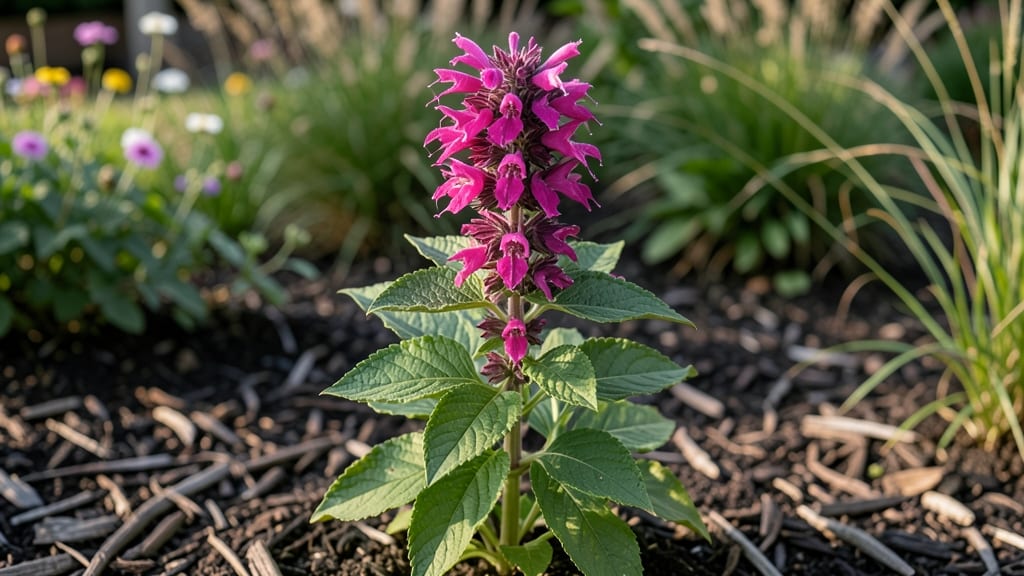
Bee balm in part shade thrives with varieties like 'Marshmallow' or 'Honeybee' that handle 3-6 hours of filtered sunlight daily. Use well-draining soil, consistent moisture, and space plants 18-24 inches apart to prevent mildew and maximize blooms.
Part shade creates the perfect balance for bee balm by reducing stress from intense sun while still providing enough light for vibrant blooms. 🌿 Varieties like 'Marshmallow' with its soft pink flowers and 'Honeybee' with golden foliage are specifically bred to thrive in these conditions, often producing more flowers than sun-loving types.
The key is mimicking natural forest understory environments where bee balm originally evolved - dappled light through tree canopies creates ideal growing conditions.
For best results, I recommend planting in early spring when soil temperatures reach 55°F and choosing locations that receive morning sun with afternoon shade. This lighting pattern helps prevent leaf scorch while still providing the energy needed for robust growth.
The well-draining soil requirement becomes especially critical in part shade, as water can pool more easily when evaporation rates are lower.
💡 In This Article
- How Light Affects Bee Balm Growth in Shaded Gardens
- Top Low-Light Bee Balm Varieties for Shady Spots
How light affects bee balm growth in shaded gardens
Bee balm's ability to thrive in part shade comes down to its photosynthetic efficiency. Unlike sun-loving plants that require 6+ hours of direct light, bee balm adapts by developing thicker leaves with higher chlorophyll concentrations.
This adaptation allows it to capture more light in lower-light conditions, similar to how shade-tolerant trees like maples optimize their leaf structure. The trade-off? Slower growth rates compared to full-sun varieties, but with more robust stems that can support the weight of those iconic tubular flowers.
Leaf variegation plays a surprising role in shade adaptation.
Varieties like 'Honeybee' with golden foliage contain fewer chlorophyll-rich cells than solid green leaves, making them more efficient at capturing the blue wavelengths that dominate in dappled light. 🌿 What's fascinating is how these plants allocate resources: in shade, they prioritize leaf development over flower production initially, then shift energy to blooms once they've established a strong root system.
This two-phase growth pattern explains why shade-grown bee balm often produces its best flowers in late summer rather than early season.
The light spectrum matters more than you might think. Part shade typically provides 20-50% of full sunlight intensity, with red wavelengths (essential for photosynthesis) being filtered out more than blue. Bee balm responds by increasing its production of phytochrome pigments, which help it "sense" the available light quality.
This is why you'll often see bee balm growing taller in shade - it's stretching to capture more light, a phenomenon called etiolation. The good news? This vertical growth actually makes the plants more resistant to wind damage in shady garden spots.
One common misconception is that all bee balm varieties perform equally in shade. The reality is that stem strength varies significantly between cultivars. For example, 'Black Adder' develops thicker stems with 15-20% more lignin than standard types, making it more stable in lower-light conditions where stems grow longer.
This structural advantage translates to fewer flopping flowers - a major headache for gardeners working with shade varieties. The lignin content also contributes to better disease resistance, as thicker cell walls make it harder for pathogens like powdery mildew to penetrate.
Temperature interacts with light in interesting ways for shade-grown bee balm. While full-sun varieties can tolerate temperatures up to 95°F, shade types often struggle above 85°F because they can't dissipate heat as efficiently.
This is why morning sun with afternoon shade works so well - it provides the 3-4 hours of direct light needed for photosynthesis while avoiding the heat stress of midday sun.
The cooler temperatures in part shade also slow down fungal growth, reducing the risk of mildew that plagues many shade plants.
For gardeners experimenting with bee balm in part shade, here's a pro tip: monitor leaf color as your best indicator of light sufficiency. Healthy leaves should be deep green on top with slightly lighter undersides.
If you notice yellowing between veins (interveinal chlorosis), it's a sign of insufficient light - the plant is struggling to produce enough chlorophyll. Conversely, if leaves develop a reddish tint, it's often a response to too much light stress, even in part shade conditions. 💫