
Flowers
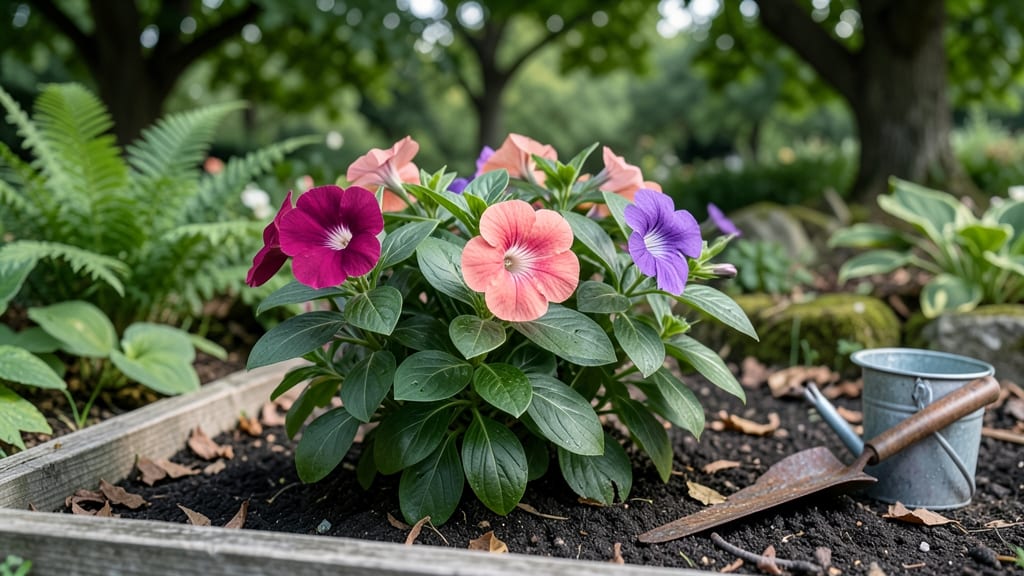
Annual flowers that do well in shade include impatiens, coleus, and fuchsia, offering vibrant blooms with minimal sunlight. These varieties adapt well to low-light conditions while requiring consistent moisture and well-draining soil for optimal growth.
Shade gardens come alive with these annuals because their broad leaves capture even diffused light efficiently, while their shallow root systems thrive in moist, cool soil. 🌿 Unlike sun-loving varieties, these plants prioritize leaf health over rapid growth, making them perfect for under trees or north-facing beds.
I’ve seen impatiens burst into color in spots that get just 2-3 hours of morning sun—proof that shade doesn’t mean sacrificing beauty.
What sets these winners apart is their ability to bloom continuously when given the right conditions. For instance, coleus delivers striking foliage year-round, while fuchsia’s pendulous flowers add vertical interest to shady corners.
The key is mimicking their natural habitat: rich, organic soil that stays evenly damp without waterlogging. Most gardeners overlook the importance of mulch here—it’s what keeps roots cool and conserves moisture between waterings.
💡 In This Article
- Why These Shade-Loving Annuals Flourish in Low Light
- Planting and Care Guide for Shade Annuals
Why these shade-loving annuals flourish in low light
Shade-tolerant annuals like impatiens and fuchsia have evolved with broader, thinner leaves that maximize surface area for capturing scattered sunlight. Their leaf structure creates a larger canopy to intercept even the faintest rays filtering through tree canopies.
For example, impatiens leaves often measure 2-4 inches wide with a waxy surface that reflects excess light while absorbing what little reaches them. This adaptation contrasts sharply with sun-loving annuals like marigolds, whose leaves are smaller and thicker to minimize water loss in intense light.
The real magic happens at the cellular level. These plants produce more chlorophyll per square inch of leaf than sun plants, allowing them to photosynthesize efficiently in low-light conditions. Coleus, for instance, contains 3-5% more chlorophyll than its sun-loving cousins, giving its leaves their deep, velvety hues.
Their root systems also stay shallower (typically 6-12 inches deep) to access moisture near the surface where shade keeps soil cooler and damper. This contrasts with sun plants that develop deeper roots to seek water in dry topsoil.
What most gardeners miss is how these annuals prioritize leaf health over rapid growth. In low light, their energy goes toward maintaining vibrant foliage rather than producing dense stems. This is why you'll see impatiens with 30-50% more leaf surface than sun annuals of similar size.
Their growth pattern creates a bushier, more compact plant perfect for shaded borders. The trade-off? They bloom continuously rather than in one explosive burst like sun annuals, which focus energy on fewer, larger flowers.
Light quality matters too. Shade annuals thrive in blue-enriched light (400-500nm wavelength) that penetrates tree canopies, while sun plants need full-spectrum light including red wavelengths (600-700nm) for flowering.
That's why fuchsia's pendulous flowers develop best in dappled shade—they receive enough blue light for leaf growth while the red wavelengths trigger their distinctive bell-shaped blooms. This light preference explains why you'll rarely see sun annuals like zinnias thriving in deep shade.
Consider the soil's role in this equation. Shade plants prefer 6.0-6.5 pH soil that stays consistently moist but well-aerated. Their roots can't handle the heat or dryness that sun plants tolerate, which is why mulching becomes critical.
A 3-inch layer of organic mulch (like shredded bark) maintains soil temperature at 65-75°F, preventing root stress. Without this protection, shade annuals often develop leggy stems as they stretch toward any available light, a classic sign of insufficient light energy for photosynthesis.
For a striking comparison, try planting impatiens and sunflowers side by side in partial shade. After 6 weeks, you'll notice the impatiens reaching 12-18 inches tall with dense foliage, while the sunflower will appear stunted and pale—its leaves only 30% as wide as those grown in full sun.
This demonstrates how shade annuals optimize their growth strategy for low-light environments where sun plants would struggle to survive.