
Light Requirements
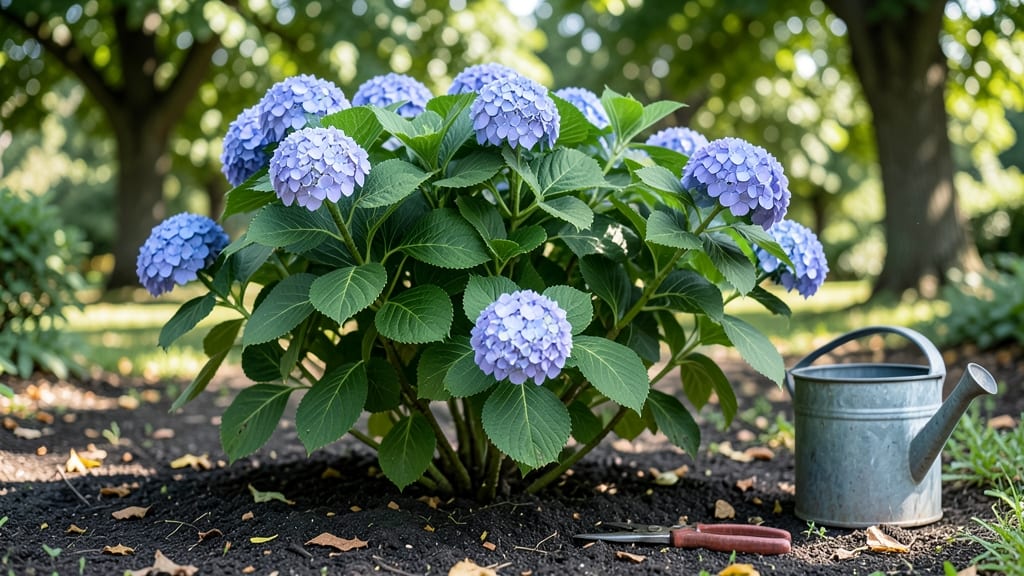
Hydrangeas in partial shade deliver those showstopping blooms without the afternoon sun stress. 🌿 I’ve grown them under oak trees and on north-facing porches—once you pick the right varieties, they thrive where full sun would scorch them.
The secret lies in matching light conditions to the plant’s needs, not just slapping it in the shade.
Start with shade-tolerant types like Endless Summer or Annabelle—they bloom reliably even with just 3-6 hours of morning sun. Your soil should drain well but stay moist, so amend with compost before planting.
Mulch keeps roots cool and conserves water, which is critical when roots can’t reach deep for moisture.
You’ll see bold, lush blooms by midsummer if you prune last year’s stems back in early spring. The flowers change color with soil pH—blue in acidic soil, pink in alkaline—so test your soil if you want to experiment. Just watch for yellowing leaves (overwatering) or sparse blooms (too much shade).
Works equally well in containers or garden beds, making it perfect for small spaces or tricky light spots. The key is patience—hydrangeas reward consistent care with years of dramatic color. Let’s get those roots settled!
📚 In This Guide
- What you need
- Instructions
- Tips and common mistakes
- Wrapping up and next steps
What you need
- ● Hydrangea plants: Choose varieties suited for partial shade, like Hydrangea macrophylla (e.g., 'Endless Summer') or Hydrangea arborescens (e.g., 'Annabelle'). Buy 3–5 plants for a fuller look.
- ● Well-draining potting mix or garden soil: Amend garden soil with 2–3 inches of compost or use a high-quality potting mix for containers.
- ● Mulch: 2–3 inches of organic mulch (e.g., shredded bark or pine straw) to retain moisture and regulate soil temperature.
- ● Slow-release fertilizer: A balanced 10-10-10 or acid-loving plant fertilizer (e.g., for azaleas/rhododendrons) to nourish blooms.
- ● Watering can or hose with a gentle spray nozzle: Hydrangeas love consistent moisture—aim for 1–1.5 inches per week.
- ● Garden trowel or shovel for planting.
- ● Pruning shears (sterilized with rubbing alcohol) for shaping and deadheading.
- ● Garden gloves to protect your hands.
- ○ Container (optional): A 15–20 gallon pot with drainage holes if growing in containers. Choose terracotta or fabric pots for better airflow.
- ○ Soil pH test kit (optional): Hydrangeas thrive in acidic soil (pH 5.2–6.0). Adjust with sulfur or aluminum sulfate if needed.
- ○ Plant stakes or cages (optional): For taller varieties like 'Nikko Blue', add support to prevent flopping.
Step-by-Step guide to cultivating hydrangeas in partial shade
Here's how to coax vibrant blooms from hydrangeas that thrive in dappled sunlight.
🌿 Step 1: Select the Right Varieties for Partial Shade
Not all hydrangeas tolerate partial shade equally. For lush, reliable blooms, focus on varieties like Oakleaf (Hydrangea quercifolia), Bigleaf (Hydrangea macrophylla)—especially 'Nikko Blue' or 'Endless Summer'—and Panicle (Hydrangea paniculata) types like 'Little Lime' or 'Limelight'. These varieties handle 3-6 hours of morning sun followed by afternoon shade beautifully.
I always check the bloom type when selecting: mophead and lacecap varieties (Bigleaf) need shade protection to prevent scorched petals, while panicle types (like 'Tardiva') actually produce more flowers in partial shade. Avoid smooth hydrangeas (Hydrangea arborescens) unless you have full sun exposure—they struggle in low light.
🪴 Step 2: Prepare the Planting Site for Optimal Growth
Hydrangeas in partial shade need well-draining, acidic soil (pH 5.5-6.2) to prevent chlorosis and encourage vibrant blooms. Amend your native soil with 2-3 inches of organic compost and a handful of peat moss or pine bark fines to lower pH naturally. I like to test soil pH before planting—if it's above 6.5, add sulfur gradually over spring and fall.
Choose a location where the plant receives morning sunlight and afternoon shade. The ideal spot gets bright, indirect light all day but avoids harsh afternoon rays. Dig a hole twice as wide as the root ball but no deeper—hydrangeas hate having their crowns buried. Loosen the roots slightly if they're pot-bound before placing in the hole.
💧 Step 3: Water and Mulch for Consistent Moisture
After planting, water deeply to settle the soil around roots, then maintain 1-1.5 inches of water weekly. Partial shade means slower evaporation, but hydrangeas still need consistent moisture—dry soil stresses plants and reduces bloom quality. I water at the base early in the morning to prevent fungal issues from wet foliage.
Apply a 3-inch layer of mulch (pine straw or shredded bark works best) around the base, keeping it 6 inches away from the stem. Mulch conserves moisture and regulates soil temperature, which is crucial in partial shade where roots work harder to absorb nutrients. Replenish mulch annually—it breaks down faster in moist conditions.
☀️ Step 4: Prune Strategically for Season-Long Blooms
Timing matters with hydrangea pruning. For Bigleaf varieties, prune right after flowering (late summer) by cutting back 1/3 of the oldest stems to encourage new growth. For Panicle types, prune in late winter/early spring to shape the plant—these bloom on new wood, so you can be more aggressive.
Never prune Oakleaf hydrangeas—they bloom on old wood and need their winter interest preserved. Watch for dead or crossing branches that block airflow; remove these at any time. Pruning too late in the season can stimulate tender new growth that won't survive winter in colder climates.
✂️ Step 5: Adjust Care for Seasonal Changes
In spring, fertilize with a balanced, slow-release fertilizer (10-10-10) when new growth appears. For blue blooms, add aluminum sulfate to acidic soil; for pink blooms, use lime sparingly. In summer, reduce watering slightly if rainfall increases, but never let soil dry completely—wilting hydrangeas rarely recover.
As fall approaches, gradually reduce watering and remove any discolored or diseased leaves to prevent overwintering pests. In winter, protect young plants with burlap wraps in cold climates below 10°F. The key is maintaining consistent moisture and soil acidity year-round—these two factors make the biggest difference in bloom quality.
Tips & tricks for thriving hydrangeas in partial shade
Between us, partial shade hydrangeas reward patience more than they demand perfection—but a few strategic tweaks can transform good blooms into showstopping displays. Here's what nobody tells you about making these shade-lovers truly shine.
Variety Selection Matters: The 3-6 hours of morning sun mentioned in Step 1 is non-negotiable for Bigleaf varieties like 'Nikko Blue'. These need that morning light to set their blooms properly, but afternoon shade prevents leaf scorch. I've seen gardeners with Oakleaf hydrangeas thrive in just 3 hours of morning sun—their leaves are more tolerant of lower light, though blooms may be slightly smaller. For maximum impact, position your plants where they get the brightest morning light available, even if it's just a few hours.
Soil Science is Everything: That pH range of 5.5-6.2 in Step 2 isn't just a suggestion—it's the difference between vibrant blue blooms and sad, greenish flowers. I test my soil every spring and fall because pH fluctuates naturally. If you're unsure about your soil's acidity, grab a cheap test kit from the garden center. For a quick fix, mix in pine needles (they're acidic) around the base before planting. And here's a pro move: use rainwater for watering when possible—it's naturally soft and won't alter your soil's delicate pH balance over time.
Watering Wisdom: The 1-1.5 inches weekly guideline in Step 3 is perfect for average conditions, but hydrangeas in partial shade actually need more consistent moisture than their full-sun counterparts. I've learned this the hard way after watching plants wilt dramatically in afternoon shade. The key is to water deeply but infrequently—aim for every 5-7 days rather than daily light sprinkles. This encourages deeper root growth, which helps them access nutrients more efficiently in lower light conditions. And always water at the base, never overhead, to prevent fungal diseases that thrive in shaded foliage.
Pruning Precision: That late summer pruning for Bigleaf varieties in Step 4 might seem counterintuitive, but timing is everything. Cutting back 1/3 of the oldest stems right after flowering gives the plant energy to develop next year's blooms while maintaining this year's display. For Panicle types, I wait until late winter when the plant is dormant—this prevents accidentally removing next year's flower buds. And here's a tip I wish I'd known earlier: always prune just above a leaf node or bud, never at a stem junction where branches meet. This ensures new growth emerges in the right direction.
Pro Tips for Hydrangea Partial Shade
- Between us, partial shade hydrangeas reward patience more than they demand perfection—but a few strategic tweaks can ...
- Variety Selection Matters: The 3-6 hours of morning sun mentioned in Step 1 is non-negotiable for Bigleaf varieties l...
- Soil Science is Everything: That pH range of 5.5-6.2 in Step 2 isn't just a suggestion—it's the difference between vi...
Frequently asked questions
Got questions about growing hydrangeas in partial shade? You’re not alone! Here are some of the most common queries—and their simple, actionable answers—to help you nurture thriving blooms with confidence.
What’s the ideal balance of sun and shade for hydrangeas?
Most hydrangeas thrive in morning sun + afternoon shade (4–6 hours of light daily). Varieties like Endless Summer or Oakleaf tolerate 6+ hours, while Bigleaf types prefer dappled shade. Avoid harsh afternoon sun, which can scorch leaves or bleach petals.
When is the best time to plant hydrangeas in partial shade?
Plant in early spring or fall (4–6 weeks before frost) for best root establishment. Avoid summer heat, which stresses young plants. If planting in containers, use well-draining soil and keep roots moist until established.
How do I adjust care if my hydrangeas get too much shade?
Too little light? Move plants to a brighter spot gradually (over 2–3 weeks). Prune leggy stems to encourage bushier growth. Fertilize lightly with acidic, slow-release granules (like 10-10-10) to compensate for lower photosynthesis. Yellow leaves may signal hunger—boost nutrients!
Can I change my hydrangea’s flower color by adjusting light?
Not directly—but light affects pH sensitivity in Bigleaf hydrangeas. For blue flowers, ensure soil pH is below 6.0 (add aluminum sulfate or coffee grounds). For pink/purple, raise pH to 6.5–7.0 with lime. Partial shade helps maintain vibrant hues longer than full sun.
Why are my hydrangeas’ leaves curling or yellowing in partial shade?
Curling/yellowing often signals overwatering, pests (like spider mites), or nutrient deficiencies. Check soil moisture—hydrangeas hate soggy roots. Spray leaves with neem oil for pests. If yellowing persists, test soil pH and amend with compost or a balanced fertilizer (like 20-20-20).
Are there shade-tolerant hydrangea alternatives for deep shade?
Yes! Try Oakleaf hydrangeas (H. quercifolia) or Panicle types (H. paniculata), which handle 3–4 hours of light. For deep shade (under trees), Mountain hydrangeas (H. macrophylla ‘Limelight’) or Smooth hydrangeas (H. arborescens ‘Annabelle’) are resilient. Just expect smaller blooms.
Wrapping up and next steps
Growing hydrangeas in partial shade is a rewarding way to enjoy stunning blooms year-round with minimal fuss! 🌿 Whether you’re drawn to the bold colors of Bigleaf varieties or the delicate charm of Panicle types, these plants thrive with the right care—think well-draining soil, consistent moisture, and a touch of afternoon shade.
With the tips and varieties you’ve explored, your garden is ready to burst with vibrant, long-lasting beauty.
Ready to transform your space? Start by selecting your favorite hydrangea and give it the perfect partial-shade spot—your future blooms will thank you! 🌸