
Shrubs
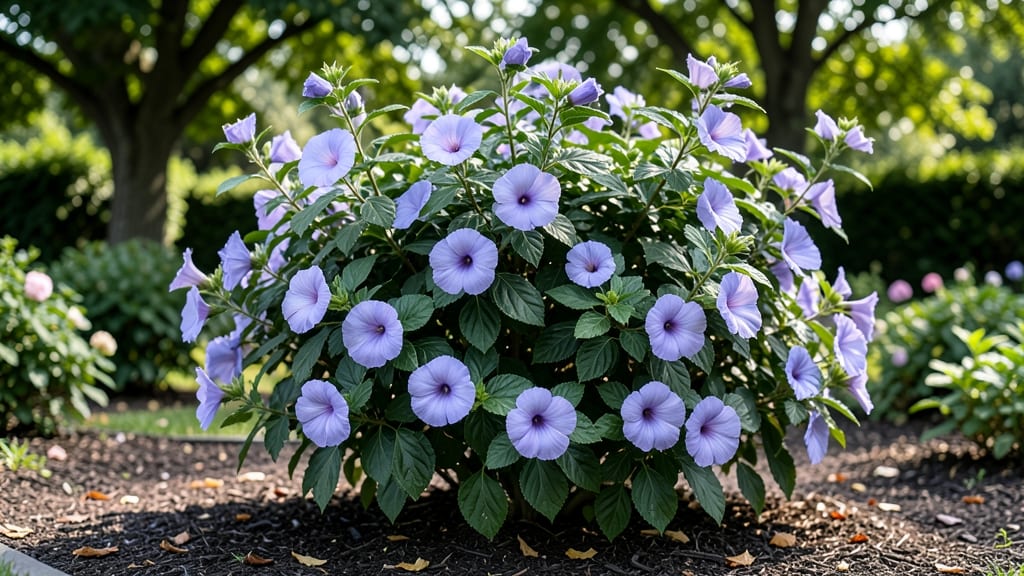
Hibiscus in shade can still thrive with partial sunlight (4-6 hours daily), though blooms may reduce without sufficient light. Choose shade-tolerant varieties like Hibiscus moscheutos or Hibiscus syriacus and ensure well-draining soil and consistent moisture. Mulch helps retain humidity in low-light conditions.
Hibiscus plants adapt surprisingly well to lower light conditions, but their performance depends on the type of shade and how you care for them. 🌿 While full sun (6+ hours) maximizes blooms, even 4-6 hours of filtered light can sustain healthy growth—just expect fewer flowers.
The key is selecting the right variety and adjusting your watering routine, since shade slows evaporation but also reduces photosynthesis. I’ve seen Hibiscus syriacus (commonly called rose of Sharon) thrive under large trees where other varieties would struggle, proving that patience and the right conditions make all the difference.
For best results, pair shade-tolerant hibiscus with mulch to lock in moisture and avoid compacted soil. A 3-inch layer of organic mulch works wonders in retaining humidity while preventing root rot—a common issue when hibiscus sits in soggy conditions.
If your garden has dappled shade from nearby structures or trees, consider positioning your hibiscus where they’ll get morning sun and afternoon shade, as this balance often yields the best compromise between growth and flowering.
💡 In This Article
- How Shade Affects Hibiscus Growth and Flowering
- Best Shade-Tolerant Hibiscus Varieties and Care Tips
How shade affects hibiscus growth and flowering
Shade directly impacts hibiscus through photosynthesis efficiency, where chlorophyll absorbs light to convert carbon dioxide and water into glucose. In low-light conditions, hibiscus plants produce less chlorophyll, resulting in paler leaves and slower growth.
The reduction in energy production forces the plant to allocate resources toward maintaining existing foliage rather than developing new blooms.
Studies show hibiscus grown in full sun (6+ hours daily) can produce up to 30% more flowers than those in partial shade, as the excess energy supports both vegetative and reproductive growth.
Hormonally, shade triggers a shift in auxin production—the plant hormone that regulates growth. Under low light, auxin accumulates in stems, causing them to elongate and become leggy, a phenomenon called etiolation. This weakens structural integrity and reduces the plant’s ability to support heavy blooms.
For example, Hibiscus rosa-sinensis (tropical hibiscus) grown in deep shade may develop stems that flop over, while Hibiscus syriacus (rose of Sharon) adapts better by developing sturdier, woody stems. The trade-off is fewer but larger flowers, as the plant prioritizes energy for fewer, more robust blooms over quantity.
Leaf size also changes dramatically in shade. Hibiscus leaves grown under filtered light often become broader and thinner to maximize surface area for capturing whatever light is available. This adaptation is visible in Hibiscus moscheutos, where shade-grown leaves can be 20-30% larger than sun-exposed ones.
However, larger leaves increase water loss through transpiration, making consistent moisture even more critical in shaded conditions. Without proper hydration, these leaves may yellow or develop brown edges, signaling stress.
Flowering frequency drops in shade due to reduced sugar production, which limits the energy available for bud formation.
Hibiscus typically require 6-8 hours of direct sunlight to trigger consistent blooming, but varieties like Hibiscus acetosella (sour hibiscus) can produce flowers with as little as 3-4 hours of light, though the blooms may be smaller.
The key is balancing light exposure with the plant’s natural growth cycle—morning sun followed by afternoon shade often yields the best compromise for both growth and occasional blooms.
Temperature plays a secondary role in shade-grown hibiscus. Without full sun, soil and air temperatures stay cooler, slowing metabolic processes. This is why hibiscus in shaded areas often benefit from mulch (3-4 inches thick) to insulate roots and maintain a consistent 65-75°F soil temperature.
In contrast, sun-exposed hibiscus can tolerate soil temps up to 85°F without stress. The cooler environment also reduces pest pressure, as many hibiscus-specific insects (like aphids) prefer warmer, sunnier conditions.
To mitigate these effects, gardeners can supplement natural light with artificial grow lights (LED or fluorescent) positioned 12-18 inches above the plant for 4-6 hours daily25%. However, the most effective solution remains selecting shade-tolerant varieties and optimizing soil conditions to compensate for reduced photosynthesis.