
Trees
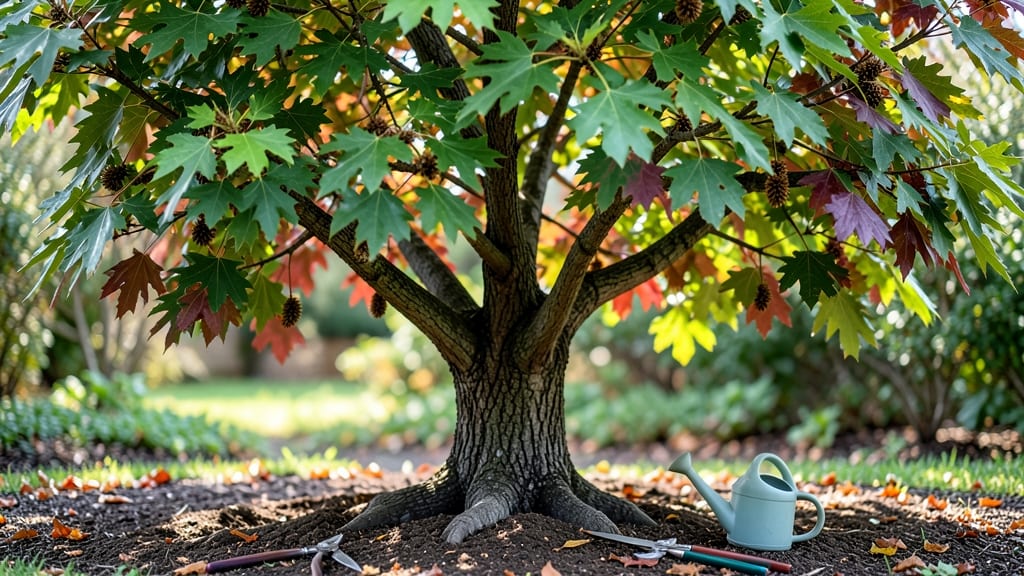
California’s scorching summers make fast-growing shade trees your best ally for instant relief—and I’ve planted enough to know which ones deliver. 🌳 The right tree can transform a sunbaked patio into a cool retreat within just a few years, with some varieties shooting up 3-5 feet annually while still providing dense shade.
My top picks balance speed with resilience, whether you’re in drought-prone coastal areas or hot inland valleys.
The fastest performers include sycamores (native and drought-tolerant) and leucadendron (a South African import that thrives in Mediterranean climates). Both reach 20-30 feet tall in under a decade, casting deep shade while requiring minimal water once established.
For smaller yards, California sycamore hybrids or California pepper trees (with their fragrant blooms) offer compact options that still block 90%+ of sunlight by year three.
What you’ll gain is more than just shade—it’s lower cooling bills, protected outdoor spaces, and a landscape that matures faster than most plants. These trees also support local wildlife, from birds nesting in their branches to bees pollinating their flowers.
The key is matching your soil (sandy vs. clay-heavy) and water access to the right species, but the payoff is worth the research.
Urban gardeners can even opt for container-grown specimens to skip the wait—just ensure the root ball is large enough for long-term stability. Whether you’re planting a single statement tree or a windbreak row, these varieties turn "waiting for shade" into "instant relief" within a growing season.
📚 In This Guide
- What you need
- Instructions
- Tips and common mistakes
- Wrapping up and next steps
What you need
- ● Tree sapling: Choose a fast-growing variety like Lombardy Poplar, Empress Tree, or Chinese Pistache (check local nurseries for California-friendly options).
- ● Shovel or digging bar: A 16-inch garden shovel or digging bar for breaking ground.
- ● Garden hose or watering can: A 5-gallon capacity for initial watering (or a hose with a gentle spray nozzle).
- ● Mulch: 3–4 inches of organic mulch (wood chips, bark, or straw) to retain moisture.
- ○ Tree stake (optional): A 4–6 ft tall stake + soft tree tie for young, top-heavy trees.
- ● Pruning shears: Bypass pruners (for shaping or removing dead branches).
- ● Soil amendment (if needed): Compost or peat moss to improve drainage in heavy clay soils.
- ● Location scouting: Pick a spot with 6–10+ feet of clearance (mature tree size!) and 6+ hours of sunlight (check your tree’s needs).
- ○ Soil test (optional but helpful): Use a DIY soil test kit ($10–$20) or send a sample to your local UCCE office for pH/drainage insights.
- ● Permits (check local rules): Some cities require permits for trees over 3 feet tall or near sidewalks.
- ● Weather prep: Plant on a cool, cloudy day (avoid extreme heat/wind) or early morning.
How to select and plant fast-growing shade trees in California
Here’s how to choose and establish shade trees that grow quickly and thrive in California’s varied climate.
🌱 Step 1: Choose the Right Fast-Growing Species for Your Climate Zone
California’s diverse microclimates demand smart species selection. In coastal areas, Empress Tree (Paulownia tomentosa) or Lombardy Poplar (Populus nigra ‘Italica’) grow aggressively, reaching 30-50 feet in 5-10 years. For inland regions, Leyland Cypress (× Cupressocyparis leylandii) or Silver Maple (Acer saccharinum) deliver rapid height with minimal care.
Check your USDA hardiness zone—most fast growers thrive in zones 7-10. Avoid species like Willow Oak (Quercus phellos) in drought-prone areas; they demand consistent moisture. Instead, opt for drought-tolerant options like Texas Ebony (Ebenopsis ebano) for Southern California.
🪴 Step 2: Prepare the Planting Site for Optimal Growth
Dig a hole twice as wide as the root ball but no deeper—planting too deep suffocates roots and slows growth. Amend the native soil with 3 inches of compost mixed into the bottom and sides of the hole. California’s clay-heavy soils benefit from this adjustment, especially for species like Empress Tree, which needs well-draining conditions.
For urban planting, test soil pH—most fast growers prefer slightly acidic to neutral (6.0-7.5). If your soil is alkaline, add sulfur-based amendments to the hole. Mulch with 3-4 inches of wood chips, keeping it 6 inches away from the trunk to prevent rot. Water deeply before planting to settle the soil.
☀️ Step 3: Plant and Water for Rapid Establishment
Place the tree in the hole so the root flare (where roots meet trunk) sits 1-2 inches above ground level. Backfill with native soil, tamping gently to remove air pockets. Stake only if necessary—most fast growers like Lombardy Poplar develop strong root systems quickly and don’t need support.
Water deeply immediately after planting, applying 10-15 gallons to encourage root spread. In California’s dry climate, deep watering every 7-10 days (until 12 inches deep) is better than frequent shallow watering. Use a soaker hose to avoid runoff, which wastes water and erodes soil.
✂️ Step 4: Prune Strategically for Health and Speed
Prune only to remove dead or crossing branches in the first year—avoid heavy cuts, which stress young trees. Fast growers like Leyland Cypress can be shaped lightly to encourage a fuller canopy, but resist the urge to trim more than 25% of foliage annually. Over-pruning slows growth and weakens structural integrity.
Watch for suckers (shoots at the base) in species like Silver Maple—remove them promptly to direct energy upward. In coastal areas, prune after the first frost to prevent disease spread. For inland varieties, prune in late winter before new growth begins.
⏰ Step 5: Monitor and Adjust for Long-Term Success
After 6-12 months, assess growth rate—healthy fast growers gain 3-6 feet annually. If growth stalls, check for pests (aphids, spider mites) or nutrient deficiencies (yellowing leaves indicate nitrogen needs). Apply a balanced fertilizer (10-10-10) in early spring, following label rates.
Adjust watering based on seasonal shifts—reduce frequency in winter but maintain deep watering. In drought years, mulch annually to retain moisture. Fast growers like Empress Tree may need stake removal after 2 years once roots stabilize.
Tips & tricks for fast-growing shade trees in California
Here's what I've learned from years of planting these rapid-growers—details that make all the difference between a struggling sapling and a thriving canopy.
Species Selection: The 30-50 feet in 5-10 years growth rate mentioned for Empress Tree and Lombardy Poplar isn't just marketing—it's real. These species grow so aggressively they can outpace weeds and establish dominance quickly. For urban areas, Silver Maple's rapid height gain (3-6 feet annually) makes it ideal for quickly providing shade over patios or parking spaces. The key is matching species to your microclimate: coastal areas get the Empress Tree, while inland regions should opt for Leyland Cypress.
Root Ball Preparation: When you dig that hole twice as wide as the root ball in Step 2, don't just eyeball it—measure the diameter of the root ball and double that number. The extra space encourages root expansion into the surrounding soil. For clay-heavy California soils, mix that 3 inches of compost thoroughly into the sides and bottom of the hole, not just at the bottom. This creates a nutrient-rich zone that roots will immediately seek out, giving your tree a growth advantage from day one.
Watering Strategy: That 10-15 gallons of water immediately after planting isn't just for show—it's crucial for breaking the soil seal around the roots. After planting, use your finger to check soil moisture at 12 inches deep every 7-10 days. If it feels dry, water again. The soaker hose recommendation is perfect for California's dry climate, as it delivers water slowly to the root zone without wasting through runoff. For the first year, consider adding a moisture meter to your toolkit—it takes the guesswork out of watering these thirsty young trees.
Pruning Precision: The 25% foliage limit during pruning in Step 4 is non-negotiable for fast growers. When shaping Leyland Cypress, focus on removing only the branches that are crossing or dead. For Silver Maple, those suckers at the base can sap energy—remove them within the first growing season to ensure all resources go toward vertical growth. And remember, pruning timing matters: coastal varieties should wait until after the first frost, while inland trees respond best to late winter pruning before new growth begins.
Pro Tips for Fast Growing Shade Trees In California
- Here's what I've learned from years of planting these rapid-growers—details that make all the difference between a struggling sapling and a thriving canopy.
- Species Selection: The 30-50 feet in 5-10 years growth rate mentioned for Empress Tree and Lombardy Poplar isn't just marketing—it's real.
- Root Ball Preparation: When you dig that hole twice as wide as the root ball in Step 2, don't just eyeball it—measure the diameter of the root ball and double that number.
Frequently asked questions
Got questions about fast-growing shade trees in California? You’re not alone! Here are some of the most common concerns—plus straightforward answers to help you plant with confidence.
What’s the fastest-growing shade tree that thrives in California’s climate?
The Empress Tree (Paulownia tomentosa) and Mimosa (Albizia julibrissin) are top contenders—growing 6–12 feet per year under ideal conditions. For drought-tolerant options, Desert Willow (Chilopsis linearis) is a stellar pick, though it grows slightly slower (3–5 feet/year). Always check local microclimates, as coastal vs. inland zones may affect growth rates.
How long until a fast-growing shade tree provides full shade?
Most fast-growing shade trees reach 50% canopy coverage in 3–5 years and full shade (70%+ coverage) in 5–10 years, depending on species and care. For example, a Silver Maple can cast deep shade within 4–6 years, while a Lombardy Poplar (though invasive in some areas) may deliver shade faster—just 3–4 years.
Are there any fast-growing shade trees I should avoid in California?
Yes! Skip Bradford Pear (weak wood, messy fruit) and Lombardy Poplar (aggressive roots, invasive in wildlands). Also, Chinese Elm can spread aggressively and attract pests. Opt for native or California-adapted species like Valley Oak (Quercus lobata) or Sycamore (Platanus racemosa) for low-maintenance, eco-friendly shade.
Do fast-growing shade trees need extra watering during California’s dry summers?
The first 1–2 years are critical—water deeply 2–3 times per week during droughts (check soil moisture 3 inches down). Once established (after 3 years), most fast growers like Desert Willow or Pomegranate (Punica granatum) thrive with weekly deep waterings or drought-tolerant mulch. Avoid overwatering, though—root rot is a real risk!
Can I plant a fast-growing shade tree near my house or pool?
Distance matters! Keep trees 15–25 feet away from structures to avoid root damage or falling branches. For pools, maintain a minimum 10-foot clearance—opt for Dwarf Alberta Spruce or Italian Cypress if space is tight. Always check the tree’s mature size (e.g., Weeping Willow can sprawl 30+ feet wide!).
| Tree | Growth Rate (ft/year) | Shade Timeframe | Water Needs |
|---|---|---|---|
| Empress Tree | 6–12 | 3–5 years | Moderate (drought-tolerant once established) |
| Silver Maple | 3–5 | 4–6 years | High (first 2 years) |
| Desert Willow | 3–5 | 5–7 years | Low (native drought-resister) |
Pro tip: Always call 811 or DigAlert before digging to avoid underground utilities—safety first!
Wrapping up and next steps
Transforming your California landscape with fast-growing shade trees is a rewarding project that enhances beauty, comfort, and even property value! 🌳 Whether you prioritize speed, drought resistance, or low maintenance, there’s a perfect match for your yard.
The key is to choose wisely—consider your soil, climate, and space—then plant with confidence.
Ready to cast your shade? Start by sketching your yard’s layout and selecting 1-2 trees that fit your goals. Need extra help? Check local nurseries or consult a California-friendly arborist for tailored advice. Your future cool oasis awaits—let’s grow it together!