
Light Requirements
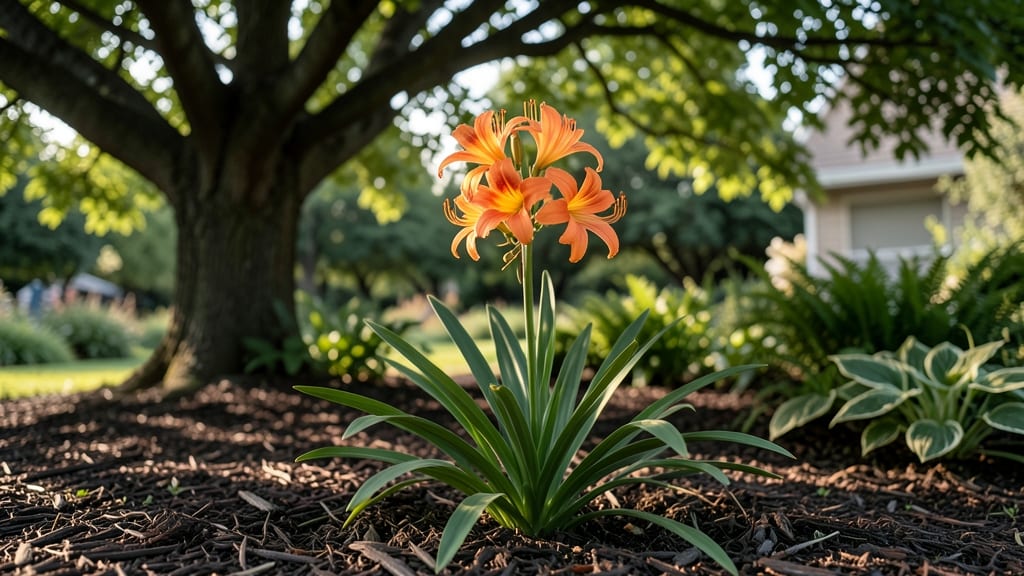
Day lilies do grow in shade but perform best with 4-6 hours of sunlight daily. Shade-tolerant varieties handle dappled light or filtered sunlight, though they’ll produce fewer blooms and weaker stems without adequate light.
While day lilies can survive in shaded areas, their growth and flowering depend heavily on light exposure. 🌿 Without sufficient sunlight, these plants may struggle to produce vibrant blooms or maintain sturdy stems.
I’ve seen shade-tolerant varieties like 'Happy Returns' or 'Pardon Me' handle partial shade better than others, but even they benefit from some direct light. For optimal results, consider planting them near trees with high canopies or in spots where they’ll get morning sun and afternoon shade.
If you’re working with a heavily shaded garden, focus on soil health—rich, well-draining soil with added compost can help compensate for lower light levels. Mulching also retains moisture and regulates soil temperature, which is especially helpful for day lilies in less-than-ideal lighting conditions.
💡 In This Article
- Light Requirements for Day Lily Growth and Flowering
- Top Shade-Tolerant Day Lily Varieties for Low-Light Gardens
Light requirements for day lily growth and flowering
Day lilies rely on sunlight for photosynthesis, the process that converts light energy into chemical energy for growth. Their broad leaves contain chlorophyll, which absorbs sunlight primarily in the blue (400-500nm) and red (600-700nm) wavelengths—this is why they display vibrant green foliage.
When deprived of adequate light, chlorophyll production slows, leading to pale, weak leaves that struggle to support the plant's energy demands. 🌱
Full-sun varieties typically require 6-8 hours of direct sunlight daily to produce their signature blooms. These cultivars invest significant energy into flower development, which demands extra light.
For example, the popular 'Caesar's Brother' variety produces 6-inch blooms only when receiving full sun, while the same plant in partial shade may produce flowers half that size or none at all.
The stems also become leggy and weak without sufficient light, increasing the risk of flopping or breaking under rain or wind.
Partial shade varieties can thrive with 3-4 hours of filtered sunlight, but even these benefit from some direct exposure. The key difference lies in their growth patterns: shade-tolerant day lilies allocate more energy to leaf and root development rather than flower production.
This explains why you might see lush foliage but fewer blooms in shaded conditions. For instance, 'Happy Returns' produces 10-15 blooms per stem in full sun but may only yield 3-5 blooms in deep shade, with stems that are 20-30% shorter.
Light quality matters just as much as quantity. Day lilies prefer bright, indirect light over deep, dark shade. Dappled sunlight—like that filtering through tree leaves—provides the ideal balance for shade-tolerant varieties.
In contrast, dense shade from evergreens or tall structures can stunt growth entirely, as these plants compete for the same light resources. The result? Stunted roots, fewer blooms, and a plant that struggles to establish itself properly. 🌿
Even shade-tolerant day lilies exhibit seasonal light sensitivity. In spring and summer, when light intensity is highest, they can handle more shade. However, during fall and early spring, when sunlight is weaker, they may need additional light exposure to maintain vigor.
This is why gardeners often see a decline in blooms during these transitional periods—it's not just about the amount of light but also its intensity and duration throughout the year.
Consider this real-world example: A day lily planted under a mature oak tree with a high canopy might receive only 1-2 hours of direct sunlight per day.
While it may survive, its blooms will likely be sparse, and the plant will appear less robust compared to one planted in a sunnier location.
The difference in growth can be dramatic—up to 50% reduction in bloom count—highlighting why light is the single most critical factor in day lily cultivation.