
Light Requirements
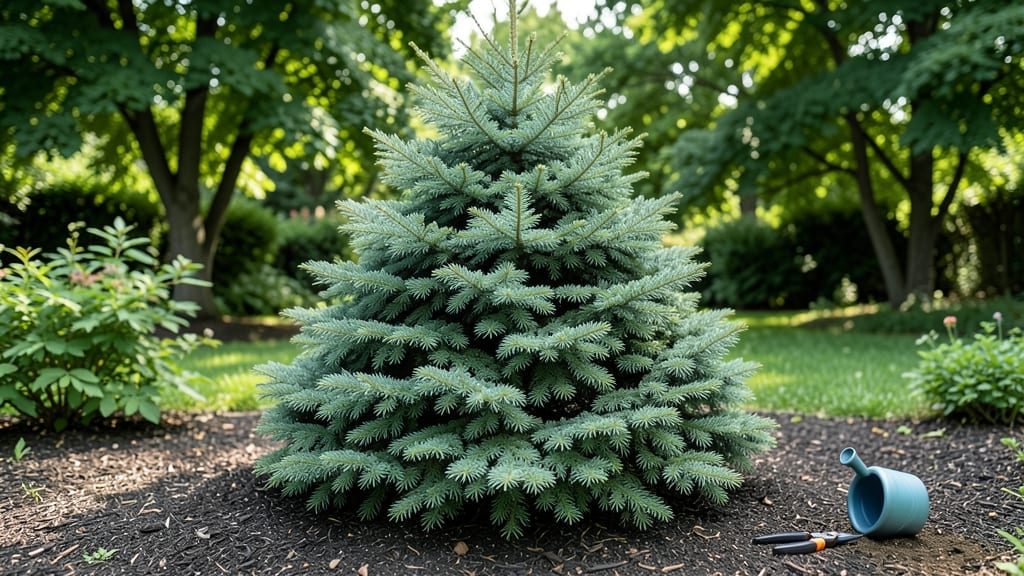
Thuja trees can grow in shade but thrive best in partial shade or full sun, with slower growth and reduced foliage density in deep shade. Dwarf varieties like 'Emerald Green' tolerate low light better than larger species like Western Red Cedar (Thuja plicata).
Thuja trees survive in shade but struggle to maintain their signature dense, vibrant foliage when deprived of adequate light. 🌿 The deeper the shade, the slower their growth becomes, often resulting in sparse branches and a more open canopy.
While they won’t die in low-light conditions, their health and appearance suffer compared to what you’d see in brighter settings. For gardeners with shady spots, choosing the right variety—like the compact 'Sunkist' or 'Little Giant'—can make all the difference in achieving lush, healthy growth.
What’s fascinating is how Thuja trees adapt differently based on their species. For instance, Thuja occidentalis varieties like 'Emerald Green' are far more shade-tolerant than their larger cousins, such as the Western Red Cedar.
This is because dwarf varieties have evolved to thrive in tighter spaces with less light, making them ideal for shaded borders or understory plantings. If you’re working with a particularly dark corner, opting for these hardier types will yield far better results than forcing a sun-loving Thuja to adapt.
💡 In This Article
- How Shade Affects Thuja Growth and Health
- Best Thuja Varieties for Shady Gardens
How shade affects Thuja growth and health
Shade directly impacts Thuja trees by limiting their ability to perform photosynthesis efficiently. These evergreens rely on sunlight to convert carbon dioxide and water into glucose for energy, but in deep shade, their chlorophyll production slows down.
This creates a nutrient deficiency that manifests as pale, sparse foliage and stunted growth. Studies show Thuja trees in full sun can grow 2-3 feet per year, while those in deep shade may only add 6-12 inches annually—a growth rate that’s barely noticeable over time.
The reduced light also weakens the tree’s natural defenses. Thuja trees grown in shade become more susceptible to fungal diseases like canker and root rot because their weakened immune systems struggle to fight off pathogens thriving in damp, shaded conditions.
You’ll often notice brown patches on the needles or blackened stems, signaling stress. Additionally, the dense canopy of surrounding trees creates a humid microclimate that encourages pests like spider mites, which thrive in low-light environments where Thuja can’t produce enough oils to repel them.
Canopy density plays a crucial role in how shade affects Thuja health. When planted under tall deciduous trees, Thuja trees receive filtered light—sunlight that’s diffused through leaves—rather than direct rays. This partial shade (30-50% sunlight) is far less damaging than deep shade (less than 20% sunlight).
In partial shade, Thuja trees maintain a moderate growth rate and retain their vibrant green color, while deep shade forces them into survival mode, prioritizing root expansion over foliage density.
Another critical factor is soil quality. Thuja trees in shade rely on mycorrhizal fungi in the soil to supplement their limited photosynthesis. These beneficial fungi help absorb water and nutrients, but if the soil is poorly drained or compacted, the tree’s roots can’t compensate for the lack of light.
This is why Thuja trees in shaded areas often benefit from organic mulch and well-draining soil amendments like compost. Without these adjustments, the tree’s growth becomes even more stunted, and its foliage may take on a dull, grayish hue.
What most gardeners don’t realize is how Thuja trees adapt structurally to shade. In low-light conditions, they develop a more open branching habit to maximize light exposure, which can make them look less dense and more "leggy."
This adaptation is a survival strategy, but it often disappoints those expecting the compact, bushy appearance of sun-grown Thuja. The trade-off is clear: while they survive, their aesthetic appeal suffers unless you choose shade-tolerant varieties specifically bred for these conditions.
For example, a Thuja occidentalis 'Emerald Green' in full sun will grow 3-4 feet tall with a 2-3 foot spread and maintain a dense, glossy foliage. The same variety in deep shade might only reach 2 feet tall with sparse, duller needles and a wider, less structured shape.
This dramatic difference highlights why selecting the right variety—and understanding the shade conditions—is essential for achieving the desired look in your garden.