
Flowers
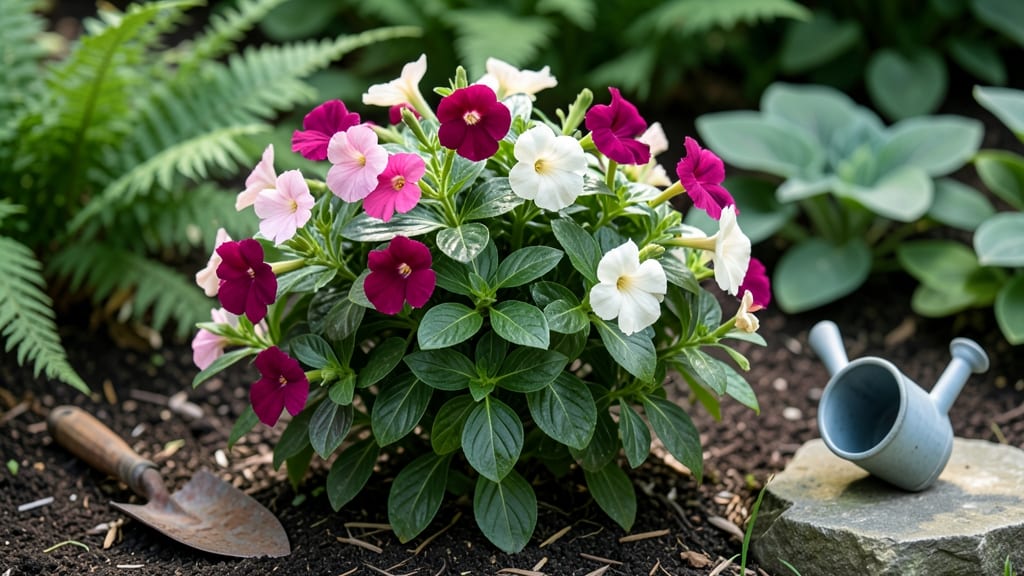
Annual flowers that grow in shade thrive in low-light gardens with varieties like impatiens, begonias, and fuchsias, offering vibrant blooms from spring through fall with minimal sunlight requirements.
Shade gardens don't mean sacrificing color—these annuals actually prefer dappled light or full shade, where many sun-loving plants would struggle. 🌿 The secret lies in their leaf structure: broad, waxy foliage captures scattered light efficiently, while shallow roots prevent competition with trees.
I've seen coleus and impatiens thrive under oak trees where nothing else blooms, proving that shade isn't a limitation but an opportunity for unique garden designs.
What sets these varieties apart is their adaptability. Most need 3-6 hours of indirect light daily, making them perfect for north-facing beds or areas with afternoon shade.
The key is choosing based on your specific light conditions—full shade (less than 3 hours) works for heuchera and astilbe, while partial shade (3-6 hours) suits begonias and fuchsias. Pro tip: Group plants with similar light needs together for maximum impact.
💡 In This Article
- How Light Conditions Affect Shade-Loving Annual Flowers
- Best Shade Annuals by Bloom Season and Color
How light conditions affect shade-loving annual flowers
Shade-tolerant annuals thrive because their leaves have evolved to maximize photosynthesis in low-light conditions. Unlike sun-loving plants, these varieties develop broader leaf surfaces with thinner cell walls that capture more diffuse light. For example, begonias have waxy leaves that reflect excess light while still absorbing enough for energy production.
The trade-off? They often grow slower but produce more vibrant blooms when sunlight is limited to 3-6 hours daily.
The science behind this involves chlorophyll efficiency. In low light, plants like impatiens activate more chlorophyll b, which helps capture blue and red wavelengths that penetrate shade better. Their root systems also stay shallower (typically 6-12 inches deep) to avoid competing with tree roots for water and nutrients.
This adaptation explains why they flourish under partial shade—where morning sun and afternoon shade create ideal conditions—rather than full sun.
Light intensity directly impacts bloom cycles. Full shade (less than 3 hours of light) often results in fewer but larger flowers, as seen with heuchera, while partial shade (3-6 hours) encourages continuous blooming.
The key difference lies in the plant's ability to balance energy for foliage growth versus flower production. For instance, coleus prioritizes leaf development in deep shade, while fuchsias shift energy to blooms when given 4-5 hours of indirect light.
Temperature plays a hidden role too. Shade gardens stay cooler, reducing water loss through transpiration. This allows plants like caladiums to maintain their vibrant foliage colors without wilting, even in 75-85°F conditions where sun-loving plants would struggle.
The cooler microclimate also extends bloom seasons—many shade annuals flower from late spring through fall because they aren't stressed by heat.
What most gardeners miss is how light quality changes with shade. Sunlight contains full-spectrum light, while shade light is richer in blue and green wavelengths. Plants like violas have adapted to thrive in this spectrum, producing deeper purple blooms as a natural response to lower red light levels.
This is why their flowers often appear more intense in shaded areas compared to sun-exposed counterparts.
For practical application, observe your garden's light patterns before planting. North-facing areas receive consistent indirect light, ideal for begonias, while east-facing spots get morning sun perfect for fuchsias.
South-facing shade (from trees) often creates partial shade conditions, where impatiens excel. Use a light meter ($20-$30) to measure foot-candles—100-500 fc is perfect for most shade annuals.