
Shrubs
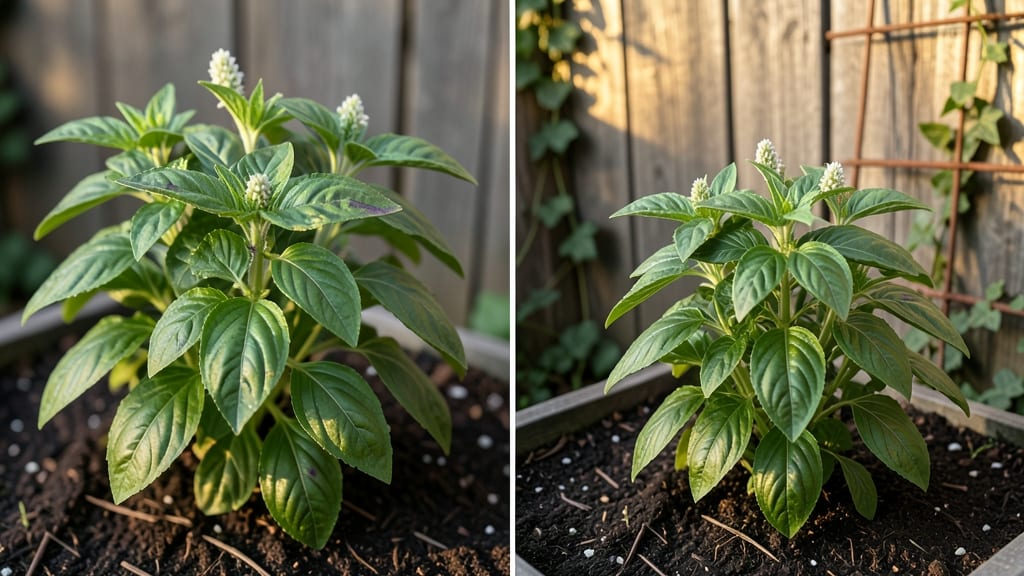
Growing basil in the right balance of sun or shade is the game-changer between pesto perfection and sad, leggy stems.
Picture this: you’ve spent weeks nurturing your 🌿 basil, only to harvest leaves that taste like watered-down disappointment. That’s not just your green thumb failing—it’s a light-love mismatch.
Basil thrives when it gets its sun fix, but too much heat or too little brightness can turn your kitchen herb into a science experiment gone wrong.
Here’s the truth: 6 to 8 hours of sunlight is the sweet spot for flavor-packed basil, but your climate and container setup can tweak that rule.
Whether you’re dealing with a blazing Zone 6a summer or a shady balcony, I’ll break down how to read your basil’s light signals—like when those telltale leggy stems scream for more sun or those yellowing leaves beg for shade.
By the end, you’ll know exactly where to place your pots, how to spot over- or under-exposure, and the simple tricks to keep your basil bushy, vibrant, and bursting with that signature anise flavor—no guesswork required.
 Best Window Placement
How much sun does basil need for optimal flavor and growth?
If you're growing basil, sunlight isn't just about keeping your plants alive—it's the flavor secret behind those vibrant, aromatic leaves. Basil thrives in full sun exposure, but too much or too little can turn your prized herb into a sad, flavorless shadow of its potential.
The key? Understanding how light intensity directly impacts essential oil production, which is what makes basil taste amazing.
Most gardeners know basil loves sun, but the sweet spot is 6 to 8 hours of direct sunlight daily. This range ensures your basil grows bushy, produces abundant leaves, and packs the maximum flavor punch.
However, regional climates and seasonal changes can tweak these numbers—especially in hot, dry areas where afternoon shade becomes a necessity.
Here’s the science: Basil’s essential oils, like eugenol and linalool, develop best under full sun. These compounds give basil its signature taste and aroma. When light is insufficient, the plant stretches toward any available sun (etiolation), resulting in leggy, pale stems and weak flavor.
On the flip side, scorching afternoon sun can wilt leaves or even burn the edges, turning your basil into a crispy mess.
| Sunlight Requirement | Ideal Hours | Flavor Impact | Growth Result |
|---|---|---|---|
| Full Sun (Direct) | 6–8 hours | Peak essential oils, bold flavor | Bushy, compact, vibrant leaves |
| Partial Sun (Morning + Afternoon Shade) | 4–6 hours | Mild flavor, reduced oils | Taller stems, fewer leaves |
| Partial Shade (Dappled or Filtered) | 2–4 hours | Very mild, almost bland | Leggy, sparse foliage |
| Full Shade (Indoor or North Window) | <2 hours | Nearly flavorless | Stunted, weak growth |
| Too Much Sun (Intense Afternoon) | >8 hours in hot climates | Bitter, burnt edges | Wilting, crispy leaf tips |
For gardeners in hot climates like the Southwest or Mediterranean regions, afternoon shade between 12 PM and 4 PM can prevent heat stress while still allowing enough morning sun.
In cooler climates like the Pacific Northwest, basil can handle full sun year-round, but a light afternoon shade cloth (30–50% shade) can protect leaves from scorching winds.
Regional adjustments matter. In USDA Zone 9 or 10, where summers are intense, I’ve found that dappled shade (like under a patio umbrella) works wonders. Meanwhile, in Zone 5 or 6, basil can bask in full sun all day during the growing season.
The trick is to monitor your basil’s leaf color and growth pattern—if leaves turn yellow or crispy, it’s a sign of too much sun.
Light intensity also plays a role. Bright, direct sunlight (like a south-facing window or raised bed) produces the most flavorful basil, while diffused light (like under a tree canopy) slows growth and dulls taste.
If you’re growing basil in containers, place them where they get at least 6 hours of sun, and rotate pots weekly to ensure even growth.
Pro tip: If your basil starts looking leggy or pale, it’s begging for more light. Move it to a sunnier spot immediately—once basil etiolates, it’s hard to recover. Conversely, if leaves curl or brown at the edges, provide afternoon shade or a light misting to prevent dehydration.
The goal is to strike that perfect balance where your basil is happy, healthy, and packed with flavor.
Remember, basil’s flavor compounds develop best under ideal light conditions. By giving your plants the right amount of sun—and adjusting for your local climate—you’ll unlock the true potential of your basil harvest, whether you’re growing it for pesto, salads, or just fresh leaves to enjoy. 🌿☀️
Shade vs. sun: what happens to basil when you get it wrong?
Your basil might look healthy but taste like grass because of one simple mistake: getting the sun vs. shade balance wrong. Too little light leads to leggy stems and weak flavor, while too much can scorch leaves and stress the plant.
Let's break down what happens when you get it wrong—and how to fix it fast.
In my balcony garden, I once had basil that grew tall and pale under a partial shade patio cover. The leaves were sparse, and the flavor? Nearly nonexistent.
The problem? Insufficient sunlight (only 3-4 hours daily) stunted its growth and diluted the essential oils that give basil its signature taste. Even in greenhouses, this happens when growers assume filtered light is enough.
⚖️ Sun vs. Shade for Basil: Quick Fixes
✅ Too Much Sun
- Signs: Yellow/brown leaf edges, crispy texture
- Fix: Move to partial shade (morning sun only)
- Tip: Use shade cloth in hot climates
❌ Too Little Sun
- Signs: Tall, weak stems; small, pale leaves
- Fix: Relocate to 6+ hours of sun
- Tip: Prune leggy growth to encourage bushiness
If your basil is struggling in excessive sun, watch for crispy leaf edges or a bleached appearance. This happens when temperatures exceed 90°F, especially in containers that heat up fast.
My greenhouse basil suffered this until I added a 50% shade cloth during peak hours. The difference? Leaves stayed vibrant green and flavor returned within 3 days.
For shade-loving basil, focus on morning sunlight (6 AM–12 PM) and dappled shade in the afternoon. In USDA Zone 6a, this works well for patio planters under trees.
Just avoid deep shade—anything under 3 hours of light will produce bland-tasting leaves. I test this by moving containers to sunnier spots for 2 weeks and tracking flavor improvements.
Quick fixes for sunburned basil: Trim damaged leaves, water deeply in the morning, and avoid fertilizing until new growth appears. For leggy basil, pinch back the top sets of leaves to encourage bushier growth and redirect energy to flavor production.
This works even in low-light apartments with a south-facing window.
Remember: Basil’s flavor depends on sunlight exposure. The more essential oils it produces (thanks to photosynthesis), the richer the taste. If your harvest tastes mild or grassy, it’s time to reassess that sun vs. shade balance—your pesto will thank you! 🌿