
Light Requirements
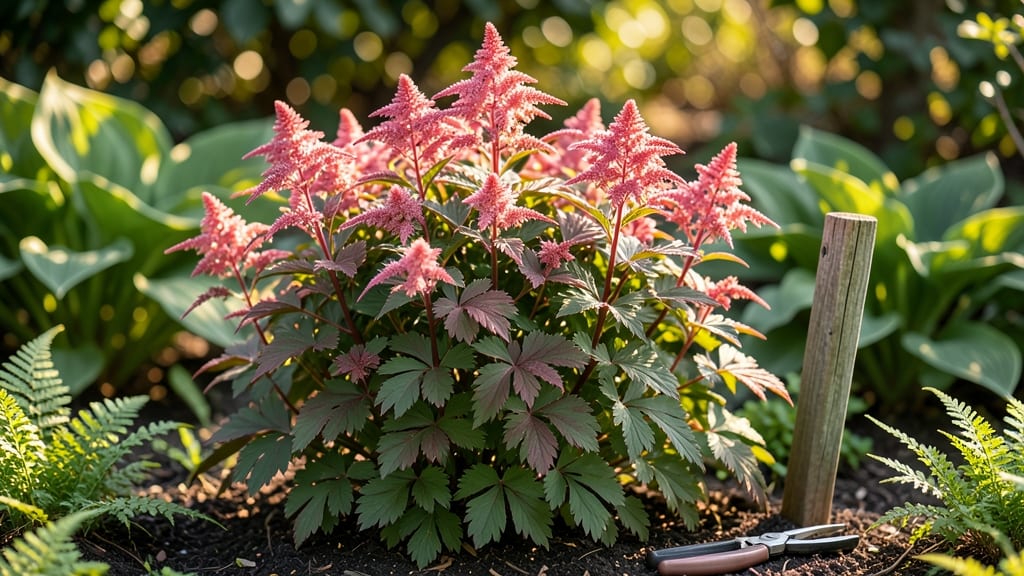
Transform those forgotten corners with astilbe in full shade—where others wilt, these feathery clouds burst into lush displays by following just a few simple rules, and the results are nothing short of magical. 🌿 short of perfect—vibrant plumes that last from early summer through fall.
The secret starts with soil: rich, moist, and slightly acidic (think compost-amended garden soil or peat-based mixes). Watering is key—keep the roots consistently damp, but never soggy, since floppy stems are a dead giveaway you’re overwatering.
In my garden, these plants drink up to 1 inch of water per week, especially during dry spells. Once established, astilbes reward patience with bold, textured blooms in pink, white, or deep purple. The trick to keeping them upright?
Plant them in groups of three or five, spaced 12-18 inches apart, and cut back the old foliage in early spring before new growth appears. This prevents disease and gives room for fresh, sturdy stems.
Pair them with hostas, ferns, or heucheras for a layered shade garden that feels lush year-round. Just watch for slugs—they love young astilbe leaves—and mulch heavily in winter to protect the roots from freezing. Trust me, your darkest corners will never look the same again.
📚 In This Guide
- What you need
- Instructions
- Tips and common mistakes
- Wrapping up and next steps
What you need
- ● Astilbe plants: Choose 10–20 mature plants (depending on garden size) in shades like ‘Deutschland’ (pink), ‘Fanal’ (red), or ‘Visions’ (lavender) for full shade thriving.
- ● Well-draining potting mix: 5–10 gallons of peat-free, organic compost blended with perlite or coarse sand (1 part perlite to 3 parts soil) to prevent soggy roots.
- ● Organic mulch: 2–3 cubic feet of shredded bark or wood chips (2–3 inches deep) to retain moisture and suppress weeds.
- ● Slow-release fertilizer: 1–2 lbs of balanced 10-10-10 or acid-loving plant food (e.g., Espoma Holly-Tone) for nutrient-rich soil.
- ● Garden gloves & trowel: 1 pair of nitrile gloves and a stainless-steel trowel (6–8 inches long) for planting.
- ● Watering can or hose with a gentle spray nozzle: 1–2 gallons capacity to avoid disturbing roots during watering.
- ● Full-shade location: 6+ hours of dappled or deep shade (e.g., under trees, north-facing walls, or near evergreens).
- ● Epsom salt: 1 cup dissolved in water (monthly) for magnesium boost and vibrant blooms.
- ● Plant supports: Bamboo stakes or decorative rings (if astilbes flop in heavy rain or wind).
- ● Slow-release moisture beads: 1–2 lbs (e.g., Hydro Start) for drought-prone areas.
- ● Pruning shears: 1 pair for deadheading spent blooms in late summer.
- ● Rain gauge: To monitor moisture—astilbes hate drying out!
Step-by-Step guide to planting astilbe in full shade
Astilbe thrives where others falter—here’s how to coax those feathery plumes to life in the shadiest spots.
🌱 Step 1: Choose the Right Location and Soil
Pick a spot that gets 2-4 hours of morning sun at most—astilbe’s signature plumes form best in cool, shaded conditions. I always test the soil first by squeezing a handful: if it crumbles easily, it’s too dry; if it sticks together, it’s too heavy. Astilbe prefers moist, well-draining soil with a pH of 6.0-6.5.
If your soil is sandy, mix in 2-3 inches of compost to retain moisture. For clay soil, work in 1-2 inches of perlite or coarse sand to improve drainage. Amend the area to a depth of 12 inches—this ensures roots have plenty of space to spread without competing with compacted soil.
🪴 Step 2: Dig Holes and Plant Crowns Correctly
Dig holes twice as wide as the root ball but only 1 inch deeper—astilbe roots are shallow, and planting too deep suffocates them. Gently remove the plant from its container and tease apart any circling roots with your fingers. This prevents the roots from growing in a tight circle, which stunts growth.
Place the plant in the hole so the crown (where the roots meet the stems) sits just below soil level. Fill the hole with soil, pressing lightly to remove air pockets but not compacting too firmly. Water deeply right after planting to settle the soil and eliminate gaps. You’ll see the soil settle about ½ inch—this is normal, so add a little more soil if needed.
💧 Step 3: Water Consistently and Mulch for Retention
Astilbe loves moisture—keep the soil evenly damp but never soggy. Water 2-3 times per week in dry spells, aiming for 1 inch of water per week. The best way to check is by sticking your finger 1 inch into the soil: if it feels dry, it’s time to water. Overwatering causes root rot, which turns leaves yellow and mushy.
Spread 2-3 inches of mulch (like shredded bark or wood chips) around the base, keeping it 2 inches away from the stems. Mulch locks in moisture and keeps roots cool. Replenish mulch in spring to maintain its protective layer—you’ll notice fewer weeds and more vibrant plumes when the soil stays consistently moist.
☀️ Step 4: Fertilize and Prune for Year-Round Health
Feed astilbe in early spring with a balanced, slow-release fertilizer (10-10-10), using ½ the recommended dose. Too much fertilizer burns roots and leads to leggy growth with fewer plumes. Scatter the granules 3 inches away from the stems and water deeply to activate them. Repeat in midsummer for a second bloom boost.
After the first frost, cut back stems to 2-3 inches above the ground. This prevents disease and makes room for fresh growth in spring. I always wear gloves—astilbe leaves can be prickly! Leave the old foliage in place over winter if your climate gets cold; it acts as natural insulation for the crown.
⏰ Step 5: Divide and Propagate Every 3-4 Years
Astilbe forms dense clumps over time, so divide them in early spring or fall when the soil is cool but workable. Dig up the entire plant and gently separate the clumps with your hands or a sharp knife. Each division should have 3-5 healthy stems—smaller clumps struggle to establish.
Replant divisions immediately in prepared soil, water deeply, and mulch as before. You’ll see new growth within 3-4 weeks, proving the plant is thriving. This keeps astilbe looking fresh and prevents overcrowding, which weakens plumes. Share extras with neighbors—they’ll thank you for these shade-loving showstoppers!
Tips & tricks for perfect astilbe planting in shady gardens
These simple strategies will help you coax the most vibrant plumes from your astilbe—even in the darkest corners of your garden.
Soil Prep Secret: Before amending your soil in Step 1, test its pH with a simple kit from your garden center. Astilbe thrives at 6.0-6.5, and adjusting the pH before planting prevents future struggles. If your soil tests too acidic, add crushed limestone (about 1 pound per 100 square feet) and mix it into the 12-inch depth we're amending. This small step makes all the difference for those feathery plumes to develop properly.
Root Handling Technique: In Step 2, when teasing apart circling roots, I like to use my fingers to gently separate them while the root ball is still moist from the container. If roots feel stubborn, dip the entire root ball in water for 5 minutes first—this makes them more pliable. The goal is to break up that tight circle without damaging the roots, which helps the plant establish faster in its new home.
Watering Wisdom: The 2-3 times per week watering guideline in Step 3 works best when you water deeply each time—aim for about 1 inch total per week. I set a rain gauge nearby to track moisture levels, and I've found that early morning watering (before 9 AM) minimizes evaporation and fungal issues. If you notice the soil staying damp longer than usual, that's actually a good sign—it means your mulch and soil amendments are working!
Fertilizer Timing: When applying that half-dose of 10-10-10 fertilizer in Step 4, I recommend doing it right after your first spring watering. This gives the granules time to dissolve and be absorbed before the next rain. The midsummer application should happen just as you see the first signs of new growth emerging—this second boost helps produce those second flush of plumes that make astilbe so rewarding.
Pro Tips for Astilbe Full Shade
- These simple strategies will help you coax the most vibrant plumes from your astilbe—even in the darkest corners of your garden.
- Soil Prep Secret: Before amending your soil in Step 1, test its pH with a simple kit from your garden center.
- Root Handling Technique: In Step 2, when teasing apart circling roots, I like to use my fingers to gently separate them while the root ball is still moist from the container.
Frequently asked questions
Got questions about growing astilbe in full shade? You’re not alone! Here are some of the most common queries—plus quick answers to help you cultivate plume perfection with confidence.
How do I know if my garden has enough full shade for astilbe?
Astilbe thrives in 4+ hours of dappled or deep shade daily (think under tall trees or north-facing walls). Test your spot: If sunlight barely reaches the ground by mid-morning, it’s likely ideal! Avoid areas with no light—astilbe still needs some indirect brightness to bloom well.
When is the best time to plant astilbe in full shade?
Plant in early spring or early fall for the best root establishment. Spring lets the plant adjust before summer heat, while fall gives it time to settle before winter. Avoid planting in peak summer—the heat stress can stunt growth. Pro tip: Water deeply after planting to reduce transplant shock!
Can astilbe grow in complete darkness (like under a dense tree canopy)?
While astilbe tolerates full shade, total darkness (like under a thick evergreen canopy) may limit blooms and vigor. If your spot is super shady, choose dwarf varieties (e.g., ‘Deutschland’) or pair astilbe with hostas or ferns for a lush, low-light combo. Monitor for leggy growth—this signals a need for slightly brighter conditions.
Why aren’t my astilbe plumes as fluffy as they should be?
Fluffy plumes often shrink due to underwatering, poor soil, or too much shade. Check these fixes:
- Water deeply 1–2x weekly (soil should stay evenly moist, not soggy).
- Amend soil with compost for nutrients.
- If plumes are sparse, trim spent blooms to encourage reblooming.
- Consider moving to a slightly sunnier spot (even 2–3 hours of morning sun helps!).
What are the best low-maintenance astilbe varieties for full shade?
For effortless growth, try these hardy, shade-loving varieties:
Variety
Height
Color
Why It’s Great
Astilbe ‘Deutschland’
12–18"
Deep pink
Compact, drought-tolerant, and blooms reliably in shade.
Astilbe ‘Fanal’
18–24"
Bright red
Vigorous and great for cutting—adds vertical interest.
Astilbe ‘Bridal Veil’
12–18"
White
Elegant, long-lasting blooms, and deer-resistant.
All three thrive in USDA Zones 4–9 with minimal fuss!
Wrapping up and next steps
Transforming your shady garden into a lush, vibrant space is easier than you think with astilbe! These feathery beauties thrive in full shade, offering plume perfection with minimal fuss.
Whether you're a seasoned gardener or just starting out, astilbe brings color and texture to even the darkest corners—so grab those clumps, get planting, and let your garden shine! 🌿✨
Ready to take the next step? Browse our plant care guides or visit your local nursery to pick out your favorite astilbe varieties today!